10 Days in Northern Laos: How to Plan a 1–2 Week Motorcycle Tour
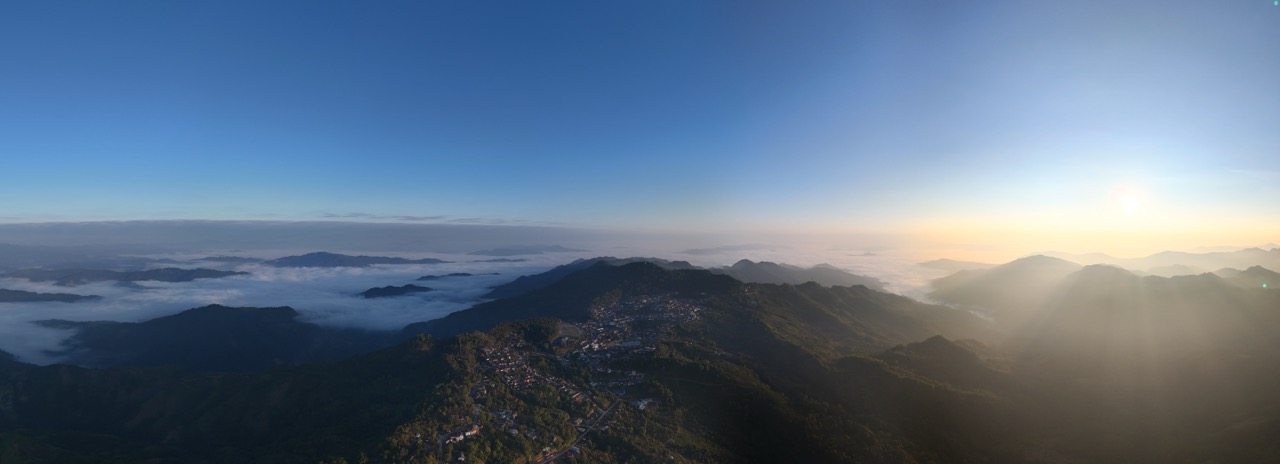
Northern Laos is one of the great motorcycle rides in Southeast Asia. Cloud-inversion mornings on the Nam Ou. Twisty mountain roads with no traffic. Villages where a Beerlao costs less than a coffee back home. This is the article we wished we'd had on our first trip — what to ride, when to go, how much it costs, and what to actually do once you're across the border.
Short answer: how do I plan this trip?
How long do I need? 7 days minimum to barely scratch the surface, 10–14 ideal, 21+ if you want to do it right and not feel like you're racing the clock.
Best time of year: November through February — cool, dry, clear skies. Avoid March–April (burning season haze) and June–September (rainy season landslides).
Best border for a Chiang Mai start: Chiang Khong / Houayxay (Friendship Bridge 4). Most reliable, best for northern Laos.
Important: Lao roads, hotels and policies change. This guide reflects our trips through 2025–2026. Treat it as a starting point, not a guarantee — and check Facebook traveler groups before relying on a specific border, hotel or restaurant.
Visa Essentials
Most foreign passport holders enter Laos on a 30-day tourist visa, available either as a Visa on Arrival (around US$45 depending on nationality) at major land borders, or as an e-Visa (around US$50, takes three or more working days to process online). Both can be extended in-country for a fee — you can usually push the total stay to 60 days, sometimes 90.
Your motorcycle is treated separately. The bike gets a 15-day Lao temporary import permit, extendable by 7 days at the same border where you entered. After that you're on a 150 THB-per-day vehicle overstay fine — small enough that many riders just pay it for a few extra days. In our experience two weeks is plenty for the north; you'll be ready to head home before the bike permit runs out anyway.
Bring two passport-sized photos for VOA, more than 6 months passport validity, and don't trust the single ATM at any small border crossing. Pay in pristine USD or Thai baht.
Warning for DTV visa holders: Re-entering Thailand at a land border on a motorcycle has become significantly harder. Officials commonly ask for proof of accommodation, an outbound flight ticket, proof of income and an employment letter — at the land crossing. A practical workaround for some riders has been to fly into Laos and rent a bike there. Full detail in our companion guide.
For the comprehensive walkthrough of every Thailand–Laos crossing, the documents, fees and the bribes question, see our companion piece: Crossing into Laos by Motorcycle: The Complete Border Guide.
Bringing Your Motorcycle into Laos
This is the half of the trip people most often get wrong. The headline rule: Lao customs officially requires Thai-registered motorcycles to be 250cc or larger. Sub-250cc bikes — including most Thai-market scooters — get turned away at the border most of the time, with occasional exceptions that you can't plan around. If your plan is "I'll just try with my Click 125", have a backup.
If you're renting from a Thai shop, you'll need a power-of-attorney document from the owner authorising you to take the bike across. Most shops charge significantly more per day for Laos rentals and require a much bigger security deposit, because retrieving an abandoned bike from Laos is somewhere between very expensive and impossible. Rider's Corner prepares the power-of-attorney document for 750 THB, handed to you with your booking.
The crossing we recommend for any trip from Chiang Mai into Northern Laos is Chiang Khong / Houayxay (Friendship Bridge 4). It's the most reliable, the most predictable, and the staff are accustomed to motorcycle travelers. Plan to arrive at the border before 3 pm — vehicle paperwork starts winding down by 4 pm even though immigration stays open later. Total fees on the day were 820 THB the last time we crossed, plus the visa.
Everything else — exact fees, the 250cc rule edge cases, how to handle officials asking for a "guide fee", what documents to bring, when to push back — is in the border crossing guide. Read that before you ride to the border.
Best Time of Year
There's a narrow optimal window for riding in Northern Laos and a couple of windows that range from miserable to dangerous.
November through February — peak
Cool nights, warm days, blue skies, and the dust hasn't started. December and January are the absolute peak — pack a light jacket because temperatures in the mountains around Phongsaly drop into single digits at night. This is the season we plan our own trips around.
March and April — burning season
Slash-and-burn agriculture coats the entire region in a thick haze that hides the karst peaks you came to see and stings the back of your throat after eight hours in the saddle. Visibility for photography is sometimes terrible, and on the worst days the air quality is genuinely dangerous.
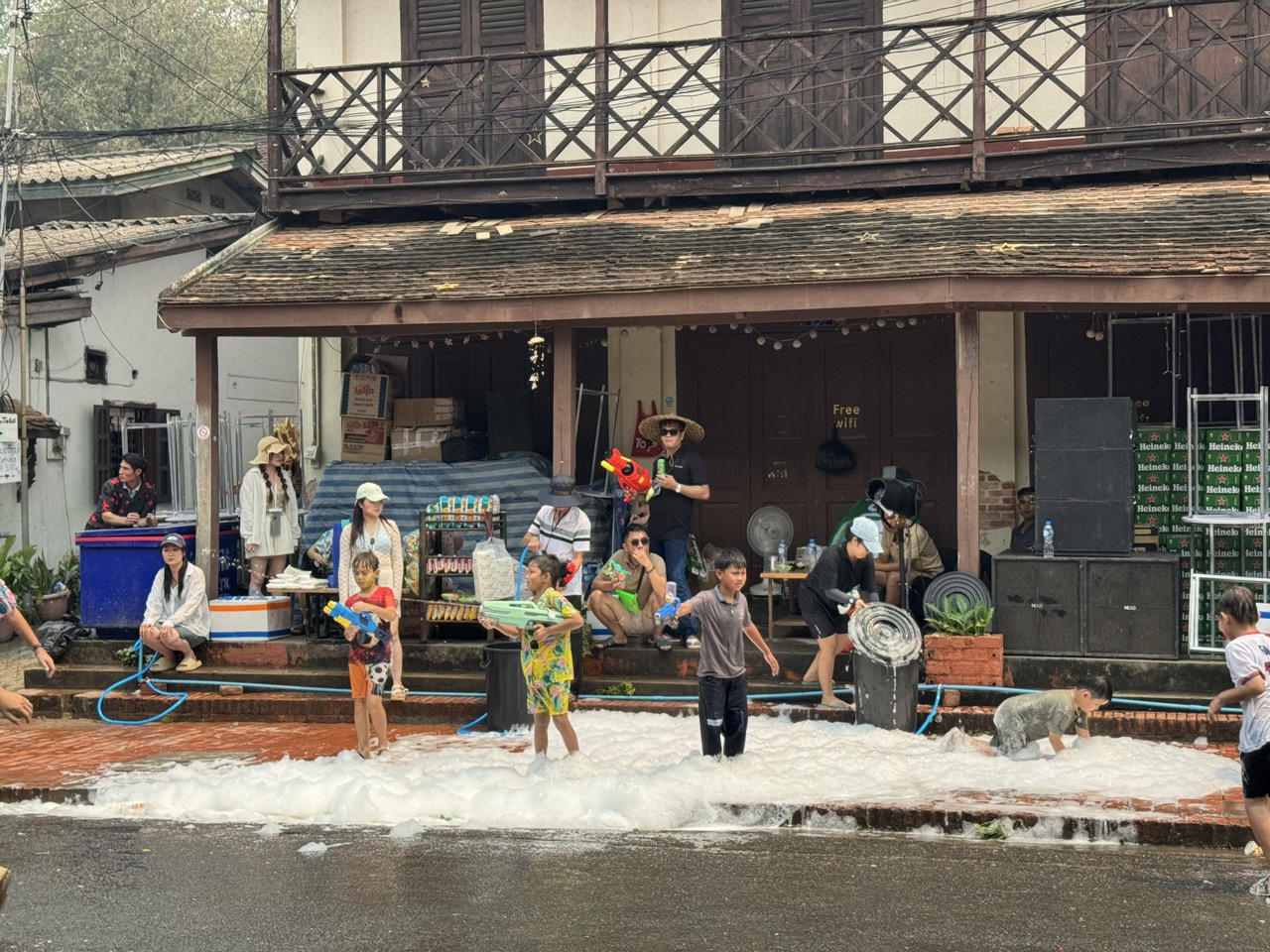
The trade-off: mid-April brings Pi Mai, the Lao New Year water festival, where Luang Prabang and Vientiane turn into city-wide water fights that are honestly worth riding through once. Just expect to be soaked from the moment you cross the border until you leave.
May — the cliff edge
Hot, getting humid, the first storms start. Worth it only if your timing forces it.
June through September — rainy season
We've ridden it. It's not impossible, but expect washouts, mud sections that can take an hour to clear by hand, and landslides on the mountain roads — particularly anything along the Nam Ou. Some of our most memorable photos came from rainy-season rides; some of our worst days too.
October — the rebound
Roads still recovering from the rains, but everything is bright green, the rice terraces are at their best, and the haze hasn't started. We've had excellent late-October trips with only minor mud sections. If you have a choice, pick December or early January.
What Bike to Ride
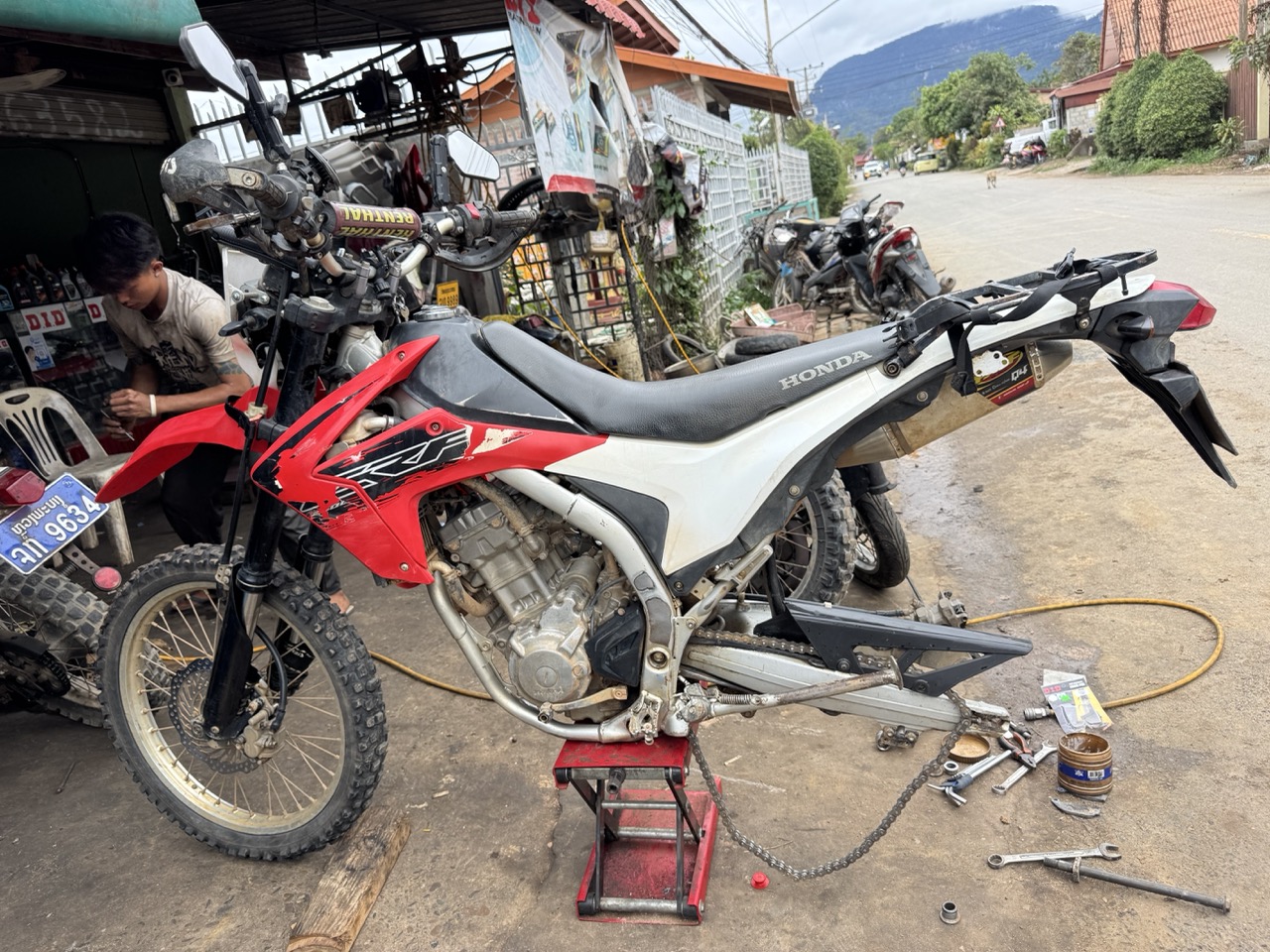
For 95% of Northern Laos, our pick is the Honda CRF 250L Rally or 300L Rally. Light enough to manage in mud, tall enough to clear the bigger ruts, fuel-efficient (you'll need it — fuel stations get sparse), and there's at least one mechanic who knows the bike in both Vientiane and Luang Prabang. We rent these to Laos-bound riders on purpose.
A 450cc dirt bike (KTM 450, Honda CRF450L) is overkill for most of the trip and miserable on the longer paved sections, but if you're going to focus on the harder dirt north of Phongsaly or Muang Khua, it's not unreasonable. Just know that finding parts in Laos is essentially zero.
Bigger adventure bikes — Versys 1000, Tenere 700, BMW GS — are fine on paved routes (Houayxay → Luang Prabang via Oudomxay; Luang Prabang → Vang Vieng → Vientiane). They become a workout on the Nam Ou river dirt and a real problem if you hit deep ruts in the rainy season. We've watched 700+ kg adventure bikes get pinned in mud and need three riders to lift them out. If you're determined to take a big bike, plan a paved-only route.
Scooters? Even leaving aside the legal issue at the border, the 17-inch wheels and limited ground clearance will eat themselves on Lao roads. Don't.
Rough Budget
Real numbers we've spent on recent trips. Per rider, per day, on the bike:
| Item | Daily (THB) |
|---|---|
| Fuel (~80 km/day at 30+ km/L) | ~300 |
| Hotel (mid-range) | 500–1,500 |
| Food (where the locals eat) | ~300 |
| Attractions / entrance fees | ~100 |
| Beerlao, snacks, miscellaneous | 100–200 |
| Daily total | ~1,300–2,400 |
One-time costs: visa US$45–50; border fees ~820 THB; full tank of fuel Thai-side (cheaper and better quality); SIM card ~200 THB; compulsory Lao insurance ~300 THB.
Trip totals (per rider, excluding bike rental and Chiang Mai costs):
- →10-day trip: roughly 18,000–24,000 THB (US$500–680)
- →14-day trip: roughly 26,000–34,000 THB (US$720–940)
The cheaper towns are Phongsaly, Muang Khua, Nong Khiaw, Muang Ngoi and Oudomxay. The expensive ones are Luang Prabang and Vientiane, where a Western dinner with a beer can land at 800–1,000 THB. Vang Vieng sits between. Add your motorcycle rental on top — rates depend on the bike and length of trip.
Currency, ATMs, Cash
Lao kip is the local currency but you'll see Thai baht and US dollars in active circulation everywhere a tourist goes. The kip has been depreciating for years — current rate is roughly 21,500 kip per US dollar — so prices for foreigners are paid in some combination of kip, baht and dollars depending on the establishment.
Border zones, mid-range hotels and some tourist-facing businesses happily take baht. Restaurants and small shops want kip. ATMs exist in Houayxay, Luang Namtha, Oudomxay, Luang Prabang, Vang Vieng, Phonsavan and Vientiane. Outside those towns, plan to be cash-only.
ATM fees are aggressive — 30,000–40,000 kip per transaction is normal — and some machines have low daily limits. We typically pull a couple million kip in Houayxay or Luang Prabang and keep a Thai baht reserve in 100s and 500s for hotels and any of the more transactional border-fee moments.
USD: bring it pristine. Torn, marked, faded or dog-eared notes are unusable in Laos — even at moneychangers. We've watched riders try to pay a hotel with a $20 bill that had a small ink dot on Andrew Jackson's lapel and be politely refused.
Connectivity & SIM Cards
Buy your Lao SIM at the border. The telecom kiosk at Houayxay is right next to the compulsory insurance window; ask the insurance lady, she'll point you at it. A 15-day data SIM with a healthy data allowance runs around 50,000–70,000 kip. The two networks worth using are Unitel and Lao Telecom — Unitel has better coverage in the mountains, in our experience.
If you'd rather not deal with a physical SIM, eSIM options like Airalo work in Laos and they have plans tuned for the country. The trade-off: more expensive per GB and you're at the mercy of whoever they roam onto.
Coverage is good in towns and along major paved routes. It thins out fast on the dirt — large stretches of the Nam Ou between Phongsaly and Muang Khua have nothing, and the road from Phongsaly toward Boun Neua drops you off the network for hours at a time. If you're riding solo, factor that in. Google Maps works offline if you've downloaded the relevant areas before crossing. We use Maps.me as a backup.
Safety, Fuel Quality, Breakdown Reality
Fuel
Lao fuel quality is variable. The big-brand stations in Luang Prabang and Vientiane are fine. Smaller-town stations are usually OK. The risk is the village hand-pump or roadside jerry-can vendor — water in the fuel, dust contamination, octane that doesn't match the pump. We fill up Thai-side, top off at named stations whenever we see them, and try not to run below quarter tank.
Spare parts
Realistically, only Vientiane and Luang Prabang have anything resembling parts availability for foreign motorcycles. Honda CRF parts are findable (just); KTM, Yamaha, Kawasaki — be prepared to wait days for someone to bus a part down from Vientiane, or to ride the bike back wounded. We carry the spare list from the border guide on every trip and have used most of it at least once.
Riding at night
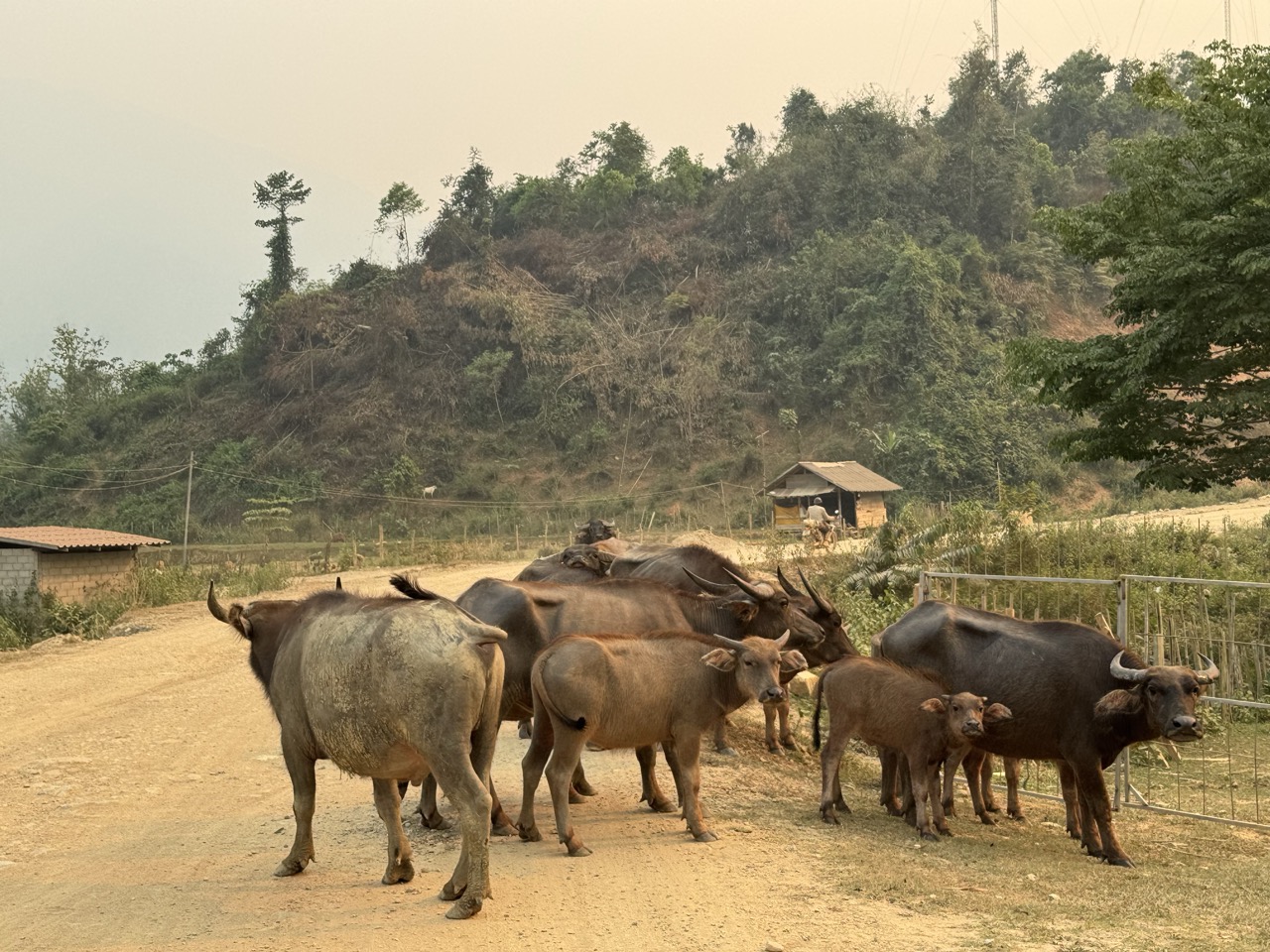
Don't. Lao road conditions, water buffalo, unmarked road works, drunk drivers in pickups, no street lighting. We've seen each of those in a single afternoon. After dark, get to where you're sleeping or pull over.
Police checkpoints
Friendly and routine. Have your Lao temporary import permit, Lao insurance and your license ready. We've never been asked for anything else, and we've never been asked for money — though the standard rule applies: a smile, no rush, and if a "fee" comes up that isn't on a piece of paper, ask politely for a receipt.
The Shape of a Northern Laos Loop
There isn't a single right route. But every Northern Laos motorcycle trip has roughly the same shape: enter at Houayxay (or, for a few brave Japanese and Swiss passport holders, at Huai Kon), and then you're choosing how to weave between three rough zones.
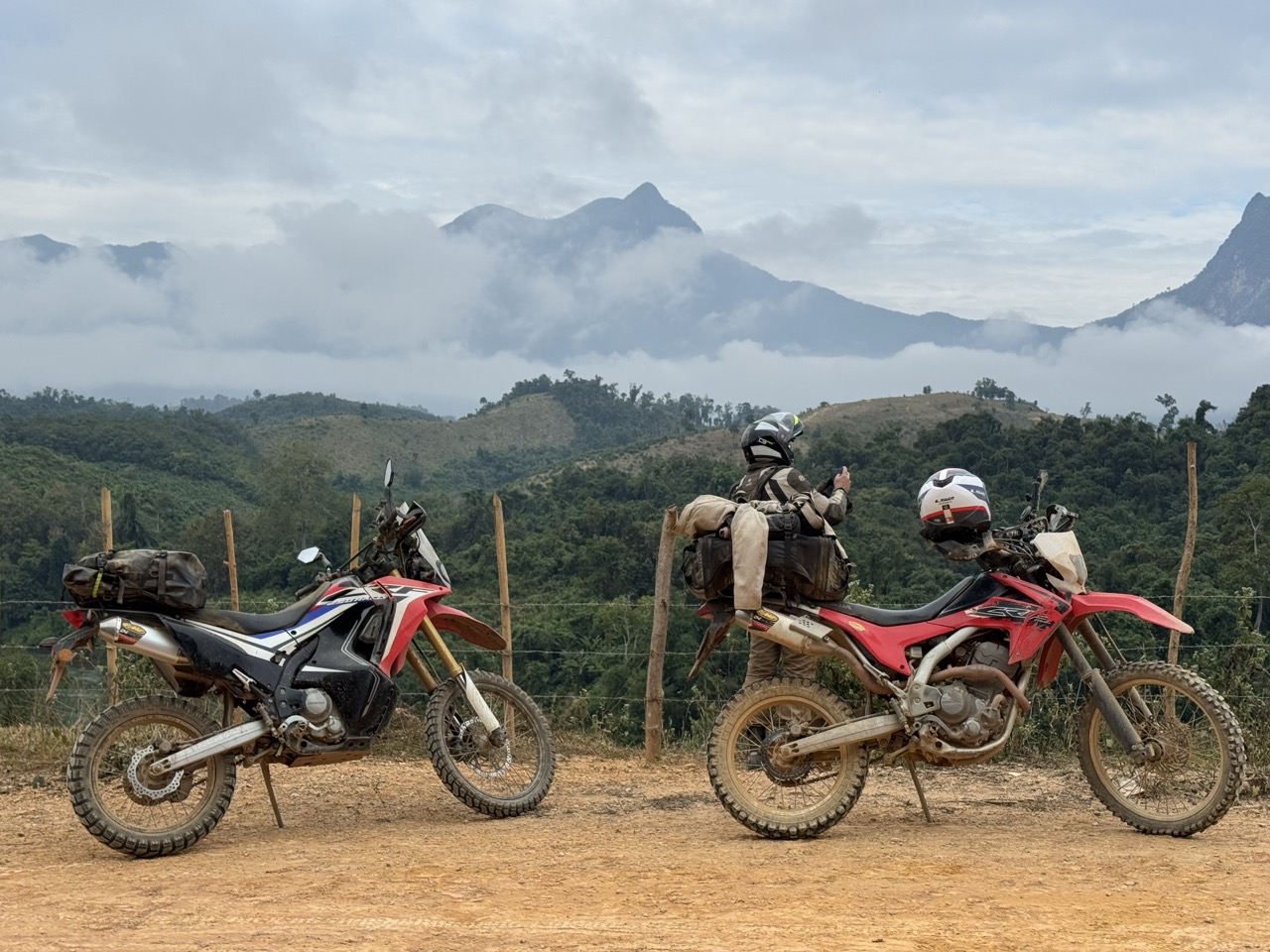
The far north — Luang Namtha and Phongsaly — is the high-altitude, ethnically diverse, dirt-road-heavy half of the trip. Long pavement up to Luang Namtha, then increasingly rough as you push to Phongsaly and the Chinese border zone. You can spend a lot of time here without backtracking.
The Nam Ou river towns — Muang Khua, Nong Khiaw, Muang Ngoi — are where most of the iconic karst-peak photography of Laos comes from. The Nam Ou itself is a mix of pavement and dirt, with sections that may be partially closed depending on the year and dam-construction status. Plan extra days here.
The Mekong south — Pak Beng, Luang Prabang, then the long ride south through Phonsavan or directly to Vang Vieng and Vientiane — is the more developed, more touristed half. Better food, better hotels, better roads, less rugged adventure.
A typical loop hits at least one town from each zone. From Vientiane you can either ride back via Vang Vieng and Phonsavan to Luang Prabang and exit at Huai Kon (Nan), or ride east to Nong Khai and exit at Friendship Bridge 1. The exit decisions usually come down to where you started and how much pavement you're prepared to put up with.
The Border & the Far North
Houayxay (Bokeo)
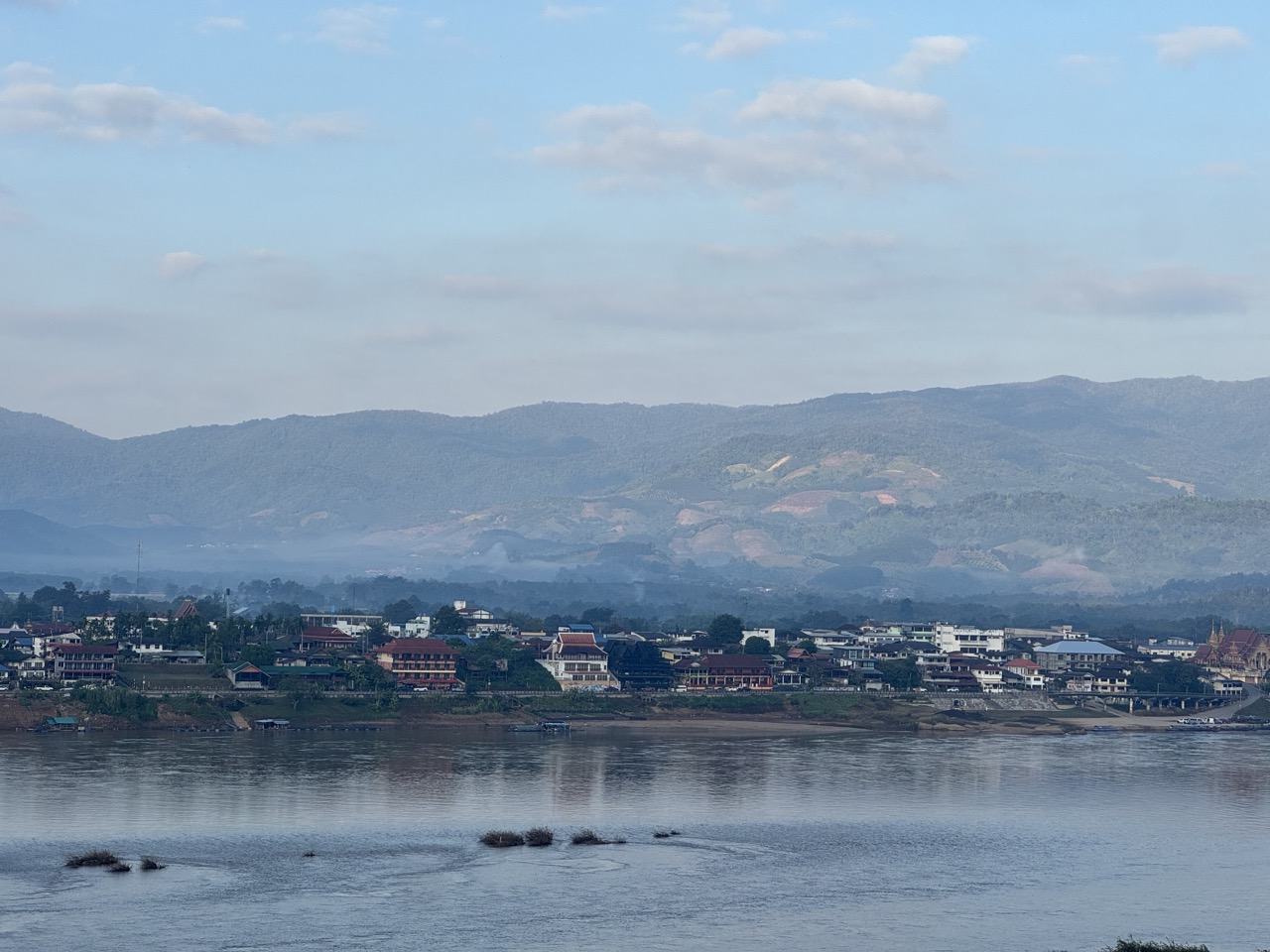
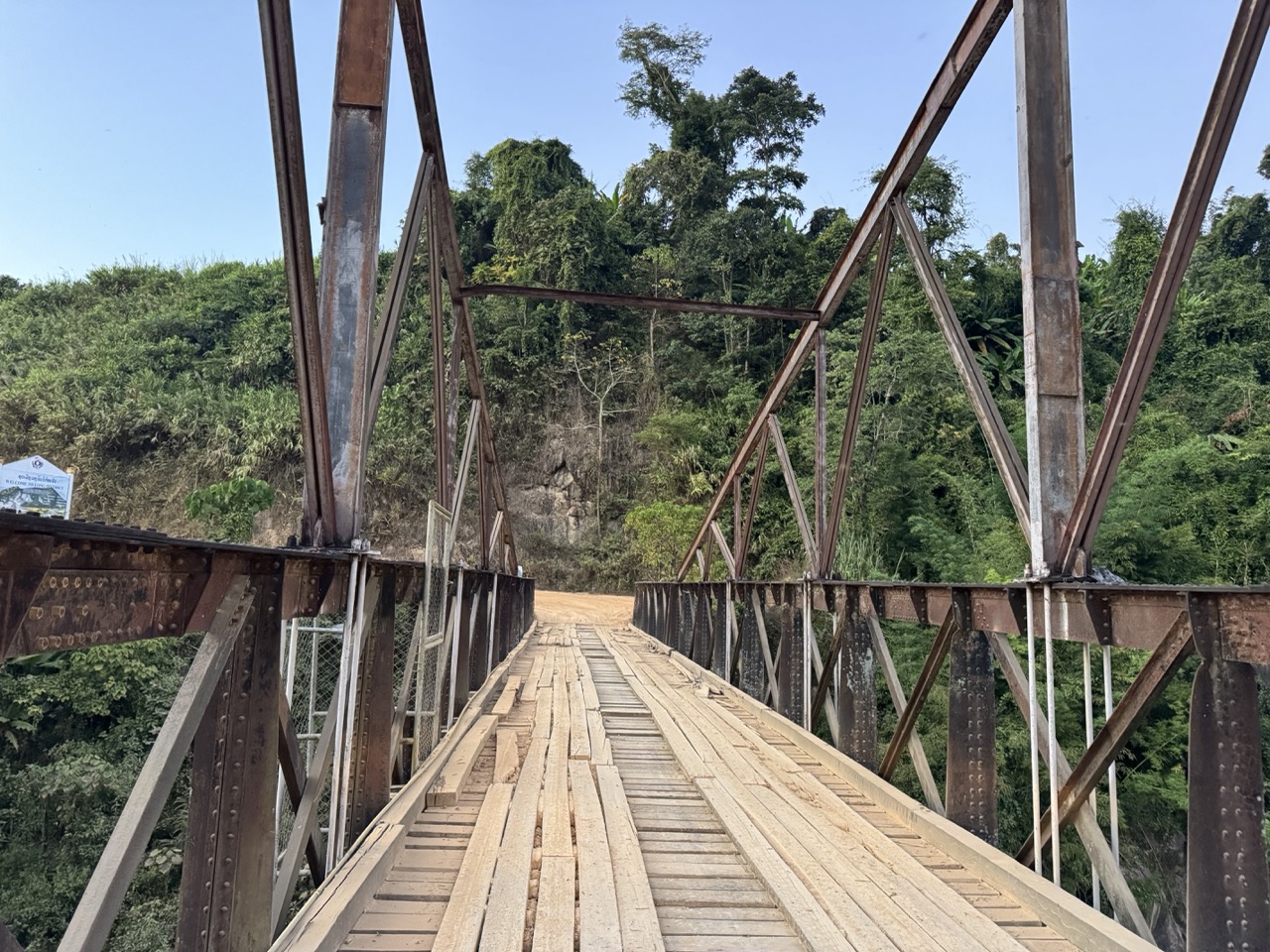
Bokeo province's capital, sitting on the eastern bank of the Mekong directly opposite Chiang Khong. For most riders this is the first night in Laos — it's hard to do the border crossing and any meaningful onward riding in the same day, so most people either stay in Chiang Khong on the Thai side and cross fresh in the morning, or cross in the early afternoon and overnight in Houayxay before pushing east.
Road in
From Chiang Khong, it's a 700m ride across Friendship Bridge 4 followed by 5 km of paved road into Houayxay town. Easy.
What to do
Honest answer — not a lot. Houayxay is a working border town, not a destination. The Mekong views from the riverside walkway are pleasant, especially at sunset when the cargo boats are still ferrying upriver. Wat Chom Khao Manilat at the top of the hill is worth the climb for a panorama of the Mekong and Chiang Khong on the Thai side; it's also a useful first taste of Lao temple architecture.
If you're here for two nights — and there are reasons to be (waiting on a SIM, processing exhaustion, deferring a long ride day) — the Gibbon Experience zip-line tour out of Houayxay is one of the better adventure tours in Southeast Asia. You'd need to leave the bike at the office for two or three days.
Food
This is your first real exposure to Lao food, and Houayxay is friendly to that. The riverside restaurants do passable Lao basics — laap (minced meat salad), tam mak hung (papaya salad), grilled river fish — though prices are border-town inflated. For something better, the small streets one block back from the river have a handful of family-run noodle places and at least one excellent Sichuan restaurant tucked into the Bokeo Lodge — proof that the Chinese influence on Bokeo's economy starts the moment you cross.
Breakfast staple: a bowl of khao soi (the Lao kind, not the Thai kind — flat rice noodles in a fermented soybean broth with crispy pork crackling). It looks like nothing and tastes like everything, especially when you're an hour into a cold morning.
Where we stayed
Several mid-range guesthouses on or near the riverfront run 600–1,200 THB. We've stayed at a couple over various trips and they're all interchangeable — clean rooms, decent wifi, secure parking for the bike. The view from the riverfront places is the only real differentiator.
Our take
Houayxay is a one-night town. Get your SIM, pull cash from the ATM near the bank on the main road, eat well, sleep, and ride east at a sensible hour. Don't overthink it. The good stuff starts after you leave.
Luang Namtha
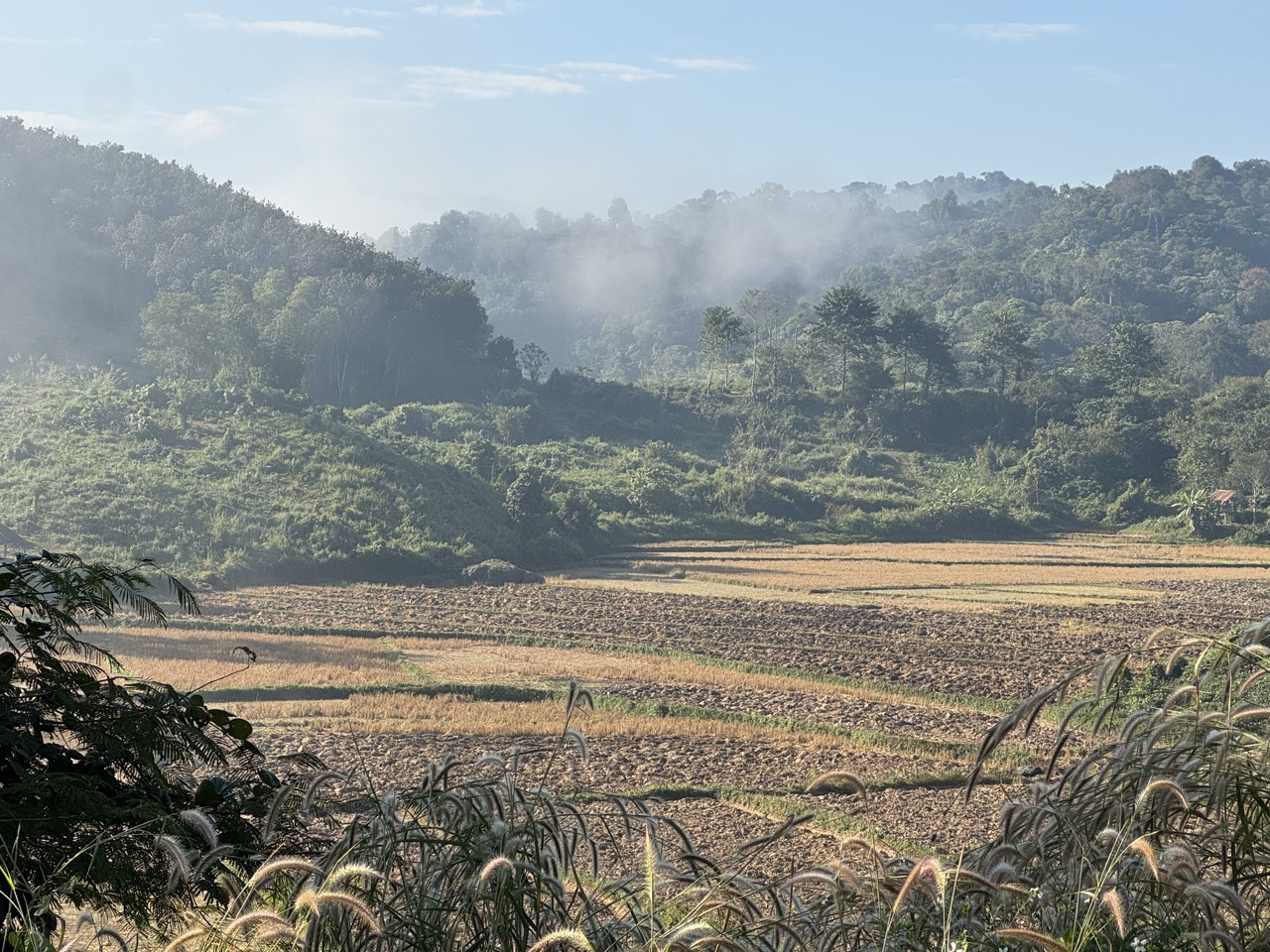
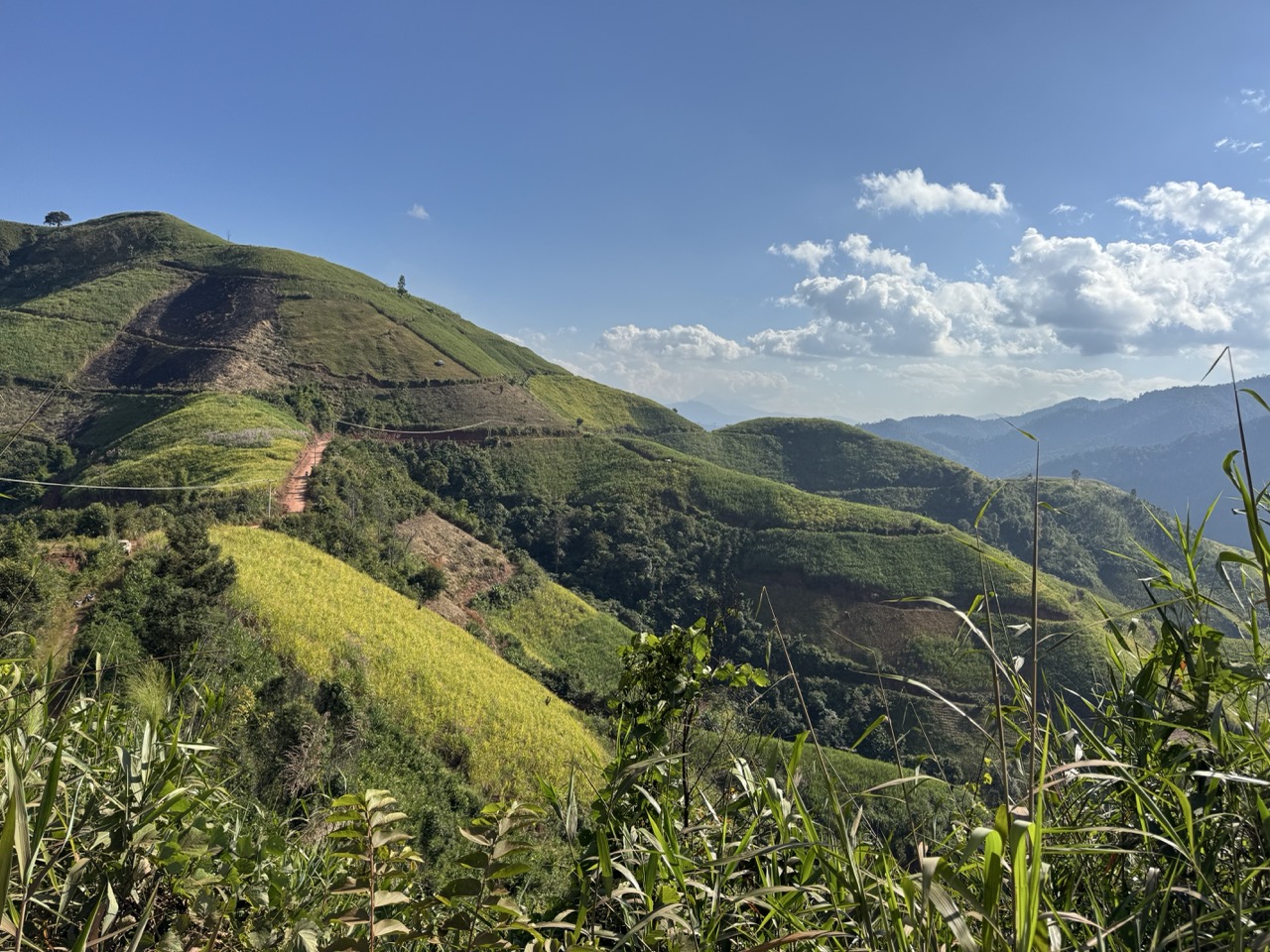
Three hours east of Houayxay on smooth pavement, Luang Namtha is most riders' first taste of the rural Lao north. The town itself is a long rectangular grid of guesthouses, restaurants and bike shops — not architecturally interesting — but the surrounding rice plain, ringed by mist-shrouded hills, is one of the prettier landscapes in Laos.
Road in
Route 3 from Houayxay to Luang Namtha is paved the whole way and well-maintained — about 175 km, 4 hours of riding with stops. Two long climbs and a few hairpin sequences make it more interesting than the distance suggests. Fuel up in Houayxay; the next reliable station is in Vieng Phoukha about halfway.
What to do
Luang Namtha is the launching point for trekking into the Nam Ha Protected Area, one of the better-preserved old-growth jungle parks in mainland Southeast Asia. Several local outfits run 1–3 day treks with overnight stays in Khmu, Akha or Lanten ethnic minority villages. If you've got the days, it's the highest-value experience in this part of the country.
Muang Sing — the side trip we always recommend — is a 60 km ride north on Route 17, paved most of the way, paralleling the Chinese border. The valley around Muang Sing is some of the prettiest agricultural country in Laos — hill tribe villages on every ridge, terraced rice paddies in every direction, and one of the best Saturday morning markets in the country if you time it right. We've ridden up to Muang Sing as a day trip from Luang Namtha and ridden up to spend the night; both work.
The Luang Namtha Stupa sits on a hill overlooking town and gives you a sunset view of the rice plain that justifies the climb.
Food
The Night Market on the main strip is the best evening food in town — five or six skewer-grill places do excellent grilled chicken, sticky rice, and laap, and a couple of pho stalls run bowls in the 25,000–30,000 kip range. For a sit-down, Manychan and Bamboo Lounge are reliable; Bamboo does respectable Western food if you need a break from rice. The riverside restaurants on the road south of town are pretty but slow.
Where we stayed
Manychan Guesthouse (700–900 THB) and Zuela Guesthouse (1,000–1,500 THB) are both close to the Night Market with secure bike parking. There are dozens of options below 600 THB if you don't mind cold-water bathrooms.
Our take
Two nights minimum. One day for the town and the Muang Sing day trip; one for trekking or rest. Some riders add a third night and ride out to one of the more remote jungle lodges in the Nam Ha for an overnight, which is worth it if your timing allows. Luang Namtha rewards slowing down — most people who push through in one night regret it later when the rest of the trip is harder.
Phongsaly
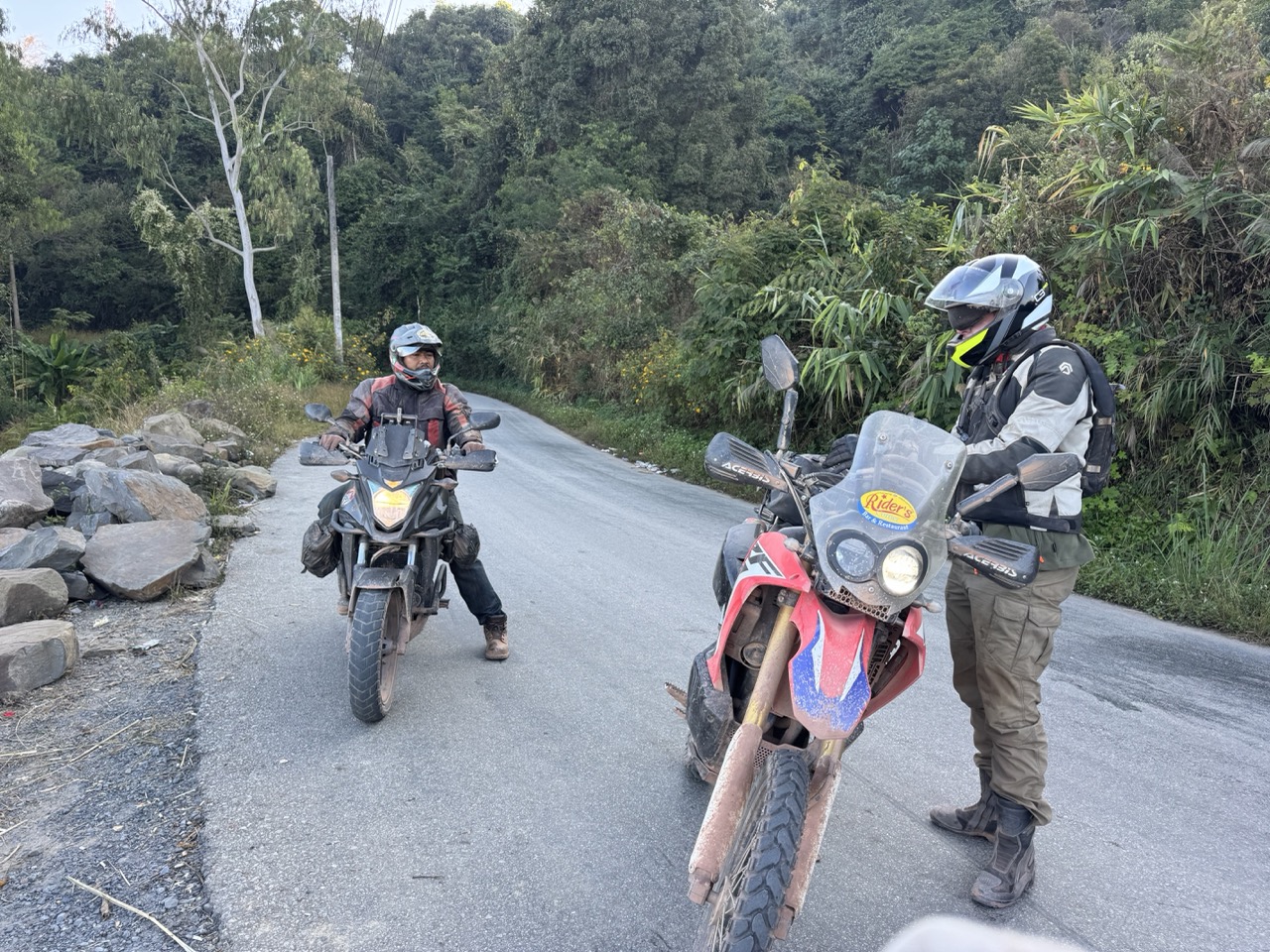
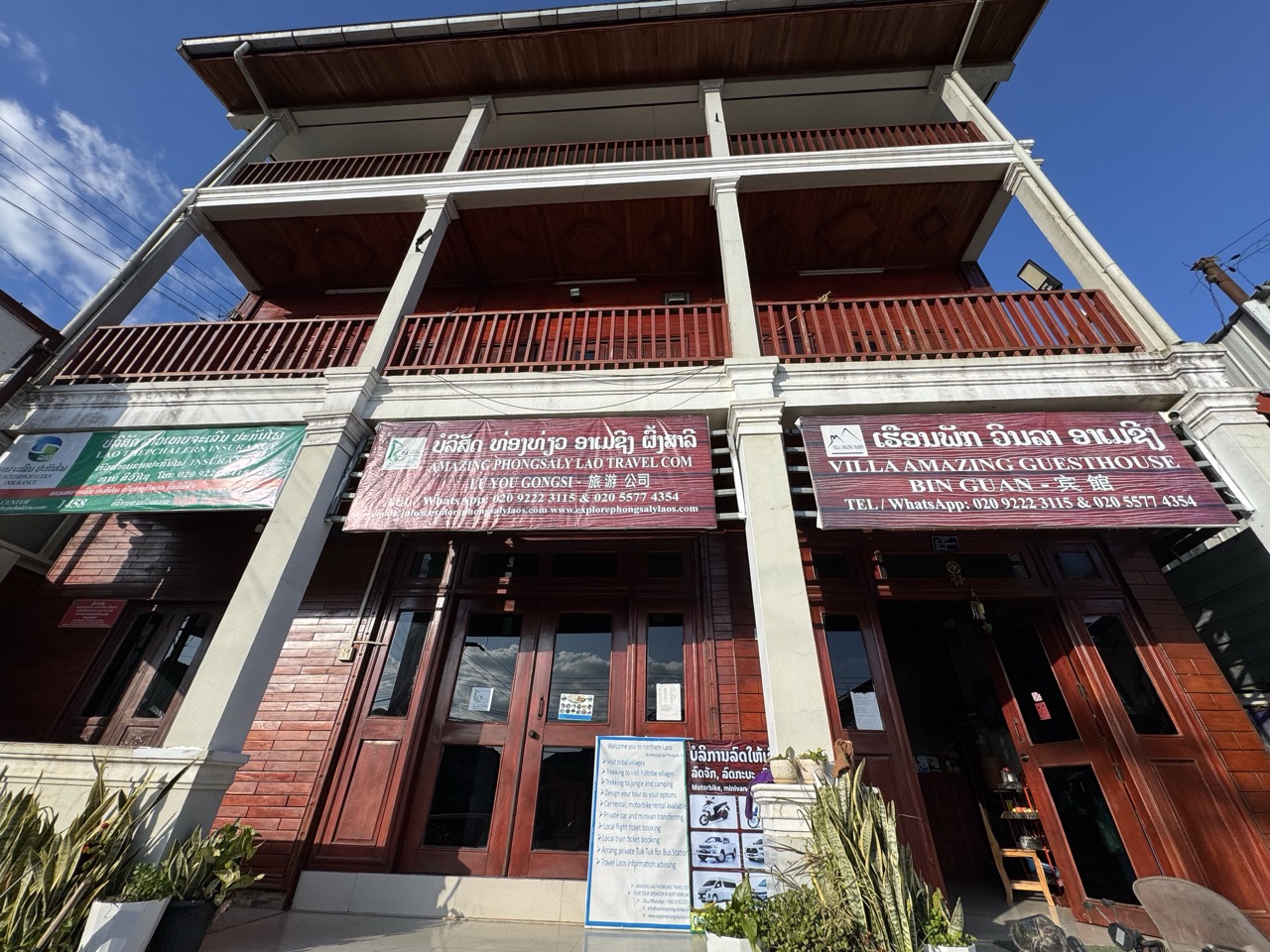
Phongsaly is the highest, most remote, most ethnically diverse province in Laos. Reaching it by motorcycle is one of the most rewarding sections of the entire trip — and one of the more demanding. The town itself sits at 1,400m, so the climate is genuinely cool year-round, the architecture is old, and the cloud-inversion sunrises from the surrounding ridges are something you remember for a long time after.
Road in
From Oudomxay, take Route 4 north — paved, scenic, but with sections that have deteriorated since the last grading. Plan 7–8 hours from Oudomxay to Phongsaly with rest stops; we usually break the ride at Boun Neua, 60 km short of Phongsaly, which has decent guesthouses and excellent noodle soup. The last hour into Phongsaly is the most demanding — tight switchbacks climbing to the town. From Muang Khua to the south, Route 1B is a more interesting (and rougher) approach and is the route we'd recommend if you can fit it.
Fuel up at every station. Phongsaly itself has petrol but smaller villages between Oudomxay and Phongsaly only have hand-pump.
What to do
Sunrise at the Phou Fa viewpoint above town is the headline attraction and worth being out of bed for. On a clear December morning the cloud sea below the ridge stretches 50 kilometres and the temperature is 5°C — bring everything warm you brought.
The Phongsaly Provincial Museum is small but useful for context on the 28+ ethnic groups in the province. The walking trail from the museum down to the old town is one of the better short walks in northern Laos.
Boun Neua village, 60 km south, is worth a half-day side ride — the surrounding hilltop villages are some of the most photogenic in Laos, and the road to Ou Tai (further north toward the Chinese border) gives you the highest-altitude motorbike viewpoints in the country if you're willing to spend a full day chasing them.
For the more adventurous: the dirt loops north of Phongsaly toward the Chinese border are some of the best advanced off-road riding in mainland Southeast Asia. There's no sign-posted route — local guides in Phongsaly can be hired for a day. Don't go alone if you don't know the area.
Food
Phongsaly is small. The market on the main road has a row of noodle and pho stalls that do strong morning service — order whatever the riders next to you ordered. For dinner, the family-run restaurants on the south side of town do laap, fried river fish, and bamboo soup at country prices. The local rice wine — lao-lao, served warm in winter — is potent. Pace yourself.
Where we stayed
Phongsaly Villa Amazing Guesthouse is the standout — wood-floored rooms, terrace views over the ridges, hot water that actually works, owner who knows the riding lines around the province. Around 700–1,000 THB depending on season.
Our take
This is the destination for most of the riders we know. Two nights minimum to make the climb worth it; three is better if the weather's clear. Skipping Phongsaly because you're "short on time" is one of the most common regrets we hear from people who've done the route once.
The Nam Ou River Towns
Muang Khua
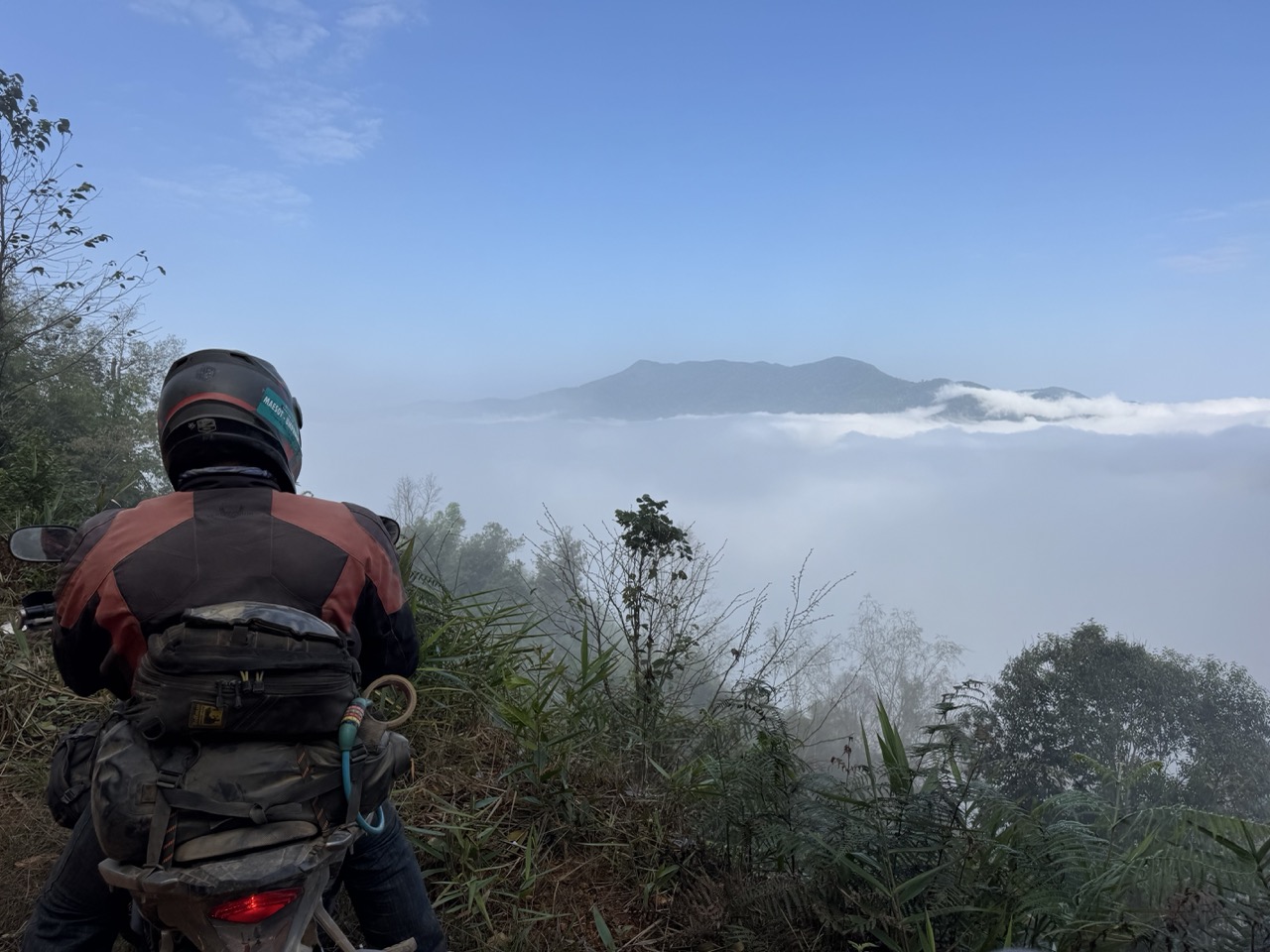
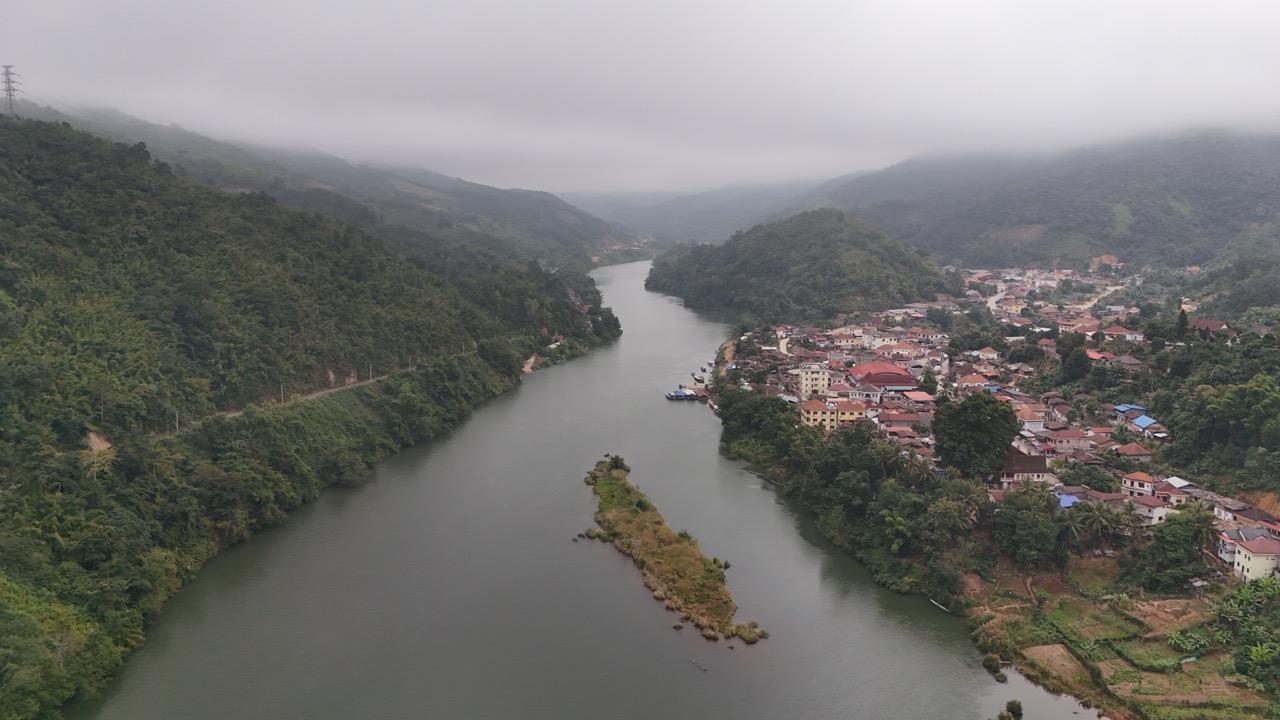
Muang Khua is the strategic crossroads on the Nam Ou river — where Route 4 from Phongsaly meets Route 2E from China and the river itself becomes the highway south. It's also one of the few Lao towns where you can put your motorcycle on a long-tail boat and float a section of the trip if you'd rather. The town is small, the views are extraordinary, and the food is among the best on the river.
Road in
From Phongsaly via Route 1B is the most rewarding option — about 5 hours of mostly-paved riding with rougher sections, dropping from the high country into the river valley. The cloud inversions in the morning hours along this route are reason enough to do it. From Oudomxay, Route 13 north then Route 4 east is faster but less interesting. From Nong Khiaw, the road north along the Nam Ou is gorgeous but partially-dirt and partially-recovering-from-dam-construction; check current conditions before relying on it.
What to do
The viewpoints around Muang Khua are the headliners. The Phou Si viewpoint above the town gives you a sunrise cloud-inversion shot that rivals anything from Phongsaly. The Nam Ou bridge at the south end of town is photogenic at any hour — we've stood on it at dawn watching boats depart for Nong Khiaw and lost track of time.
The Nam Ou boat ride from Muang Khua to Nong Khiaw (about 4 hours, 110,000 kip per person) is one of the all-time iconic Southeast Asian river journeys — limestone karst peaks rising on either side, jungle to the waterline, monks bathing on the bank. You can put a small motorcycle on the boat for an additional fee. We've done it once and don't regret it; it's a strong rest day even if you don't normally do rest days.
Food
The riverfront restaurants at the south end of town serve grilled river fish, bamboo soup and laap at fair prices. The standout is a small family-run noodle shop two doors up from the boat landing — no English menu, point at what someone else has ordered. The local sticky rice and chili-paste combination is the best we've had in northern Laos.
Where we stayed
Sernnali Hotel is the safe choice (800–1,200 THB), with secure bike parking and English-speaking staff. The riverfront guesthouses are 400–700 THB and have better views; pick one based on whether you value the morning sun or quiet sleep more.
Our take
Two nights. One for the cloud inversion, one for the boat option or a slow rest day. Muang Khua is small and quiet and the silence after Phongsaly's wind is part of the appeal.
Nong Khiaw
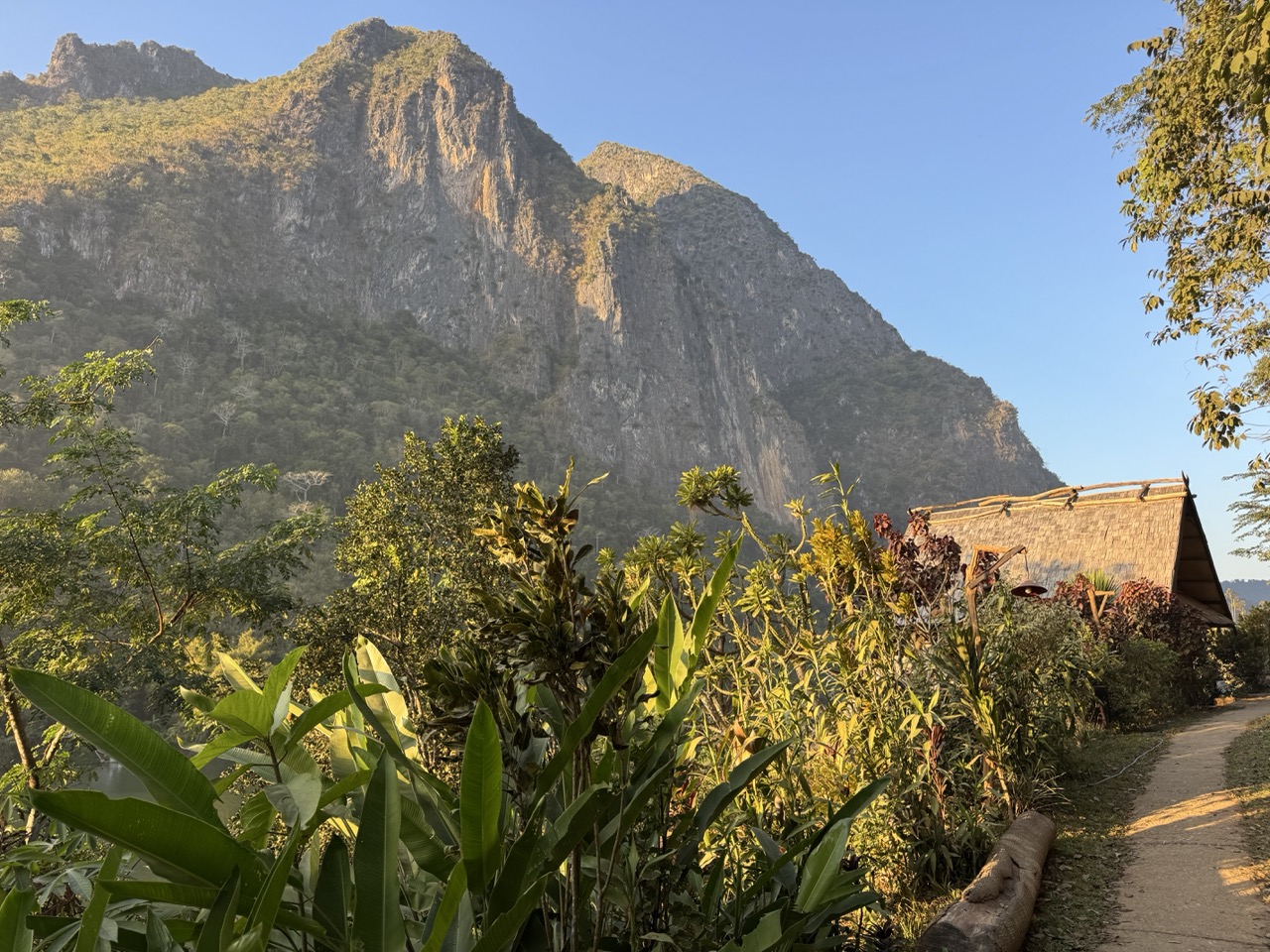
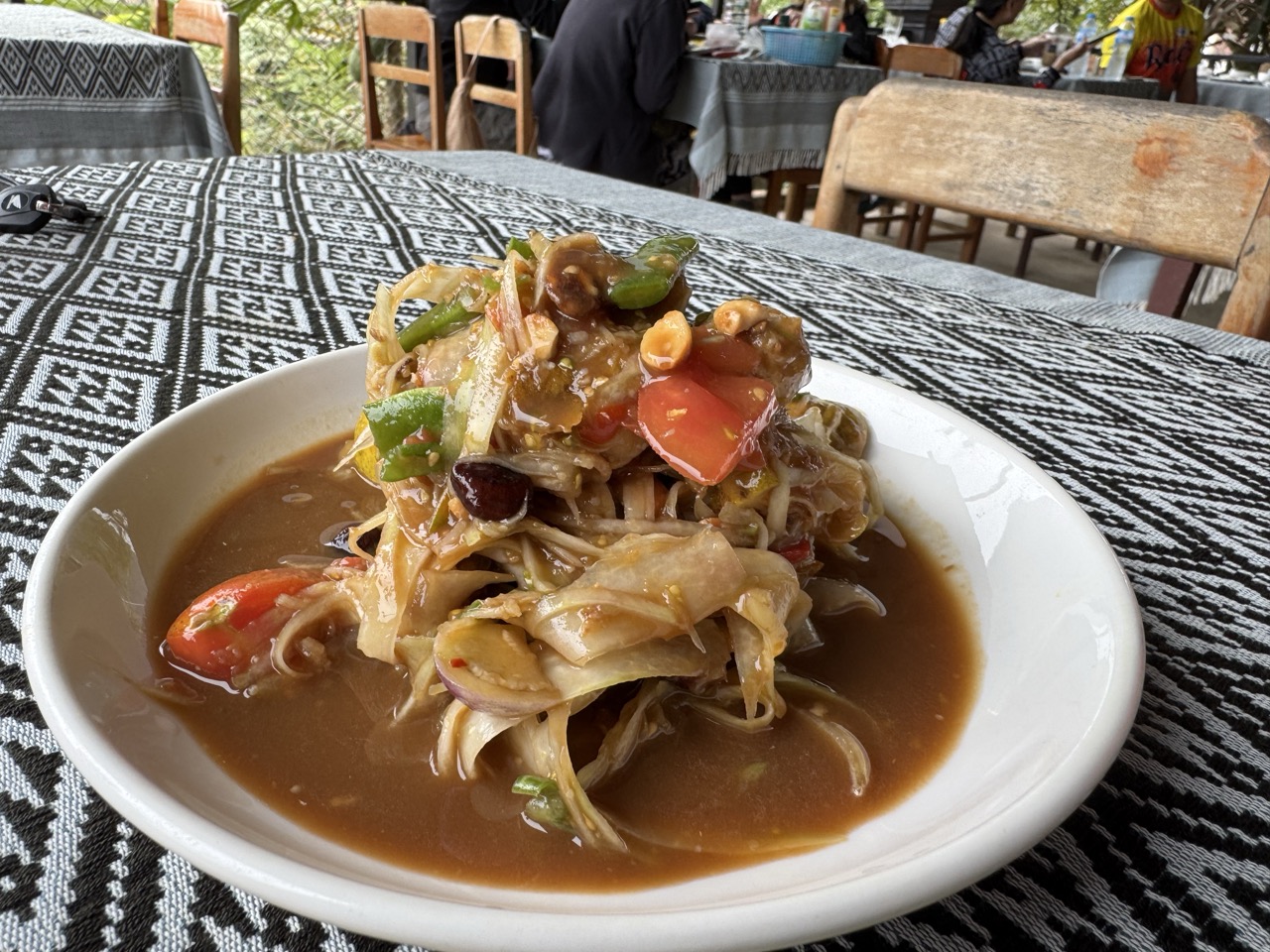
Nong Khiaw is the postcard town of Northern Laos. Set on a bend of the Nam Ou where the river is squeezed between two giant limestone walls, the town's photograph alone has put it on a thousand travel-blog hero shots. It deserves the attention. It also has the best riding access of any of the Nam Ou river towns — paved road in from the south, decent road in from the north, dirt-road excursions to half a dozen viewpoints in the area.
Road in
From Luang Prabang via Route 13 north then Route 1C east is fully paved, about 3 hours, easily the prettiest paved road in the country once you turn off Route 13. From Oudomxay, Route 13 south then 1C is also paved and quick. From Muang Khua, the dirt road south is rougher but gives you the river-valley views the boat passengers see; check conditions in the rainy season.
What to do
The top attraction is the climb to Pha Daeng Peak — 2–3 hours up, 1–2 hours down, hot, sweaty, and one of the best 360° viewpoints in mainland Southeast Asia. Start at 4 am if you want sunrise from the summit; start at 7 am if you don't. Bring two litres of water minimum.
For shorter walks: the viewpoint above the bridge is a 30-minute climb with a similar payoff for a fraction of the work. The 100 Waterfalls hike out of nearby Ban Sop Khan is a half-day adventure that involves walking up the bed of a small river — lovely in the dry season, demanding in the rainy season, and one of the more unusual hikes in Laos.
Pha Tok caves, 2 km out of town, were used as a wartime hideout by the Pathet Lao and remain set up for self-guided tours. Combine with the bridge viewpoint for a half-day.
Food
The riverfront has a row of restaurants pushing similar menus — laap, papaya salad, fried fish, fried rice. Some are tourist-priced; some are not. For a real meal, try the family-run riverside places at the south end of town — bamboo-pole tables on the sand, food cooked over coals, and a Beerlao that costs 12,000 kip. The papaya salad here is hot; ask for medium if you don't want to spend the night regretting your choices.
Where we stayed
Bamboo bungalows along the riverbank go for 400–800 THB depending on season — the front-row places have direct river views and are non-negotiable bookings in peak season. Mid-range hotels back from the river run 800–1,500 THB. The fanciest place in town is around 2,500 THB and has a pool overlooking the river.
Our take
Two to three nights. One for Pha Daeng. One for the bridge viewpoint and slow time. One more if you're going to do the 100 Waterfalls hike or take the boat upriver to Muang Ngoi. Nong Khiaw is the town we keep coming back to — there's a quality of light here in the late afternoon that even the photos don't quite capture.
Muang Ngoi
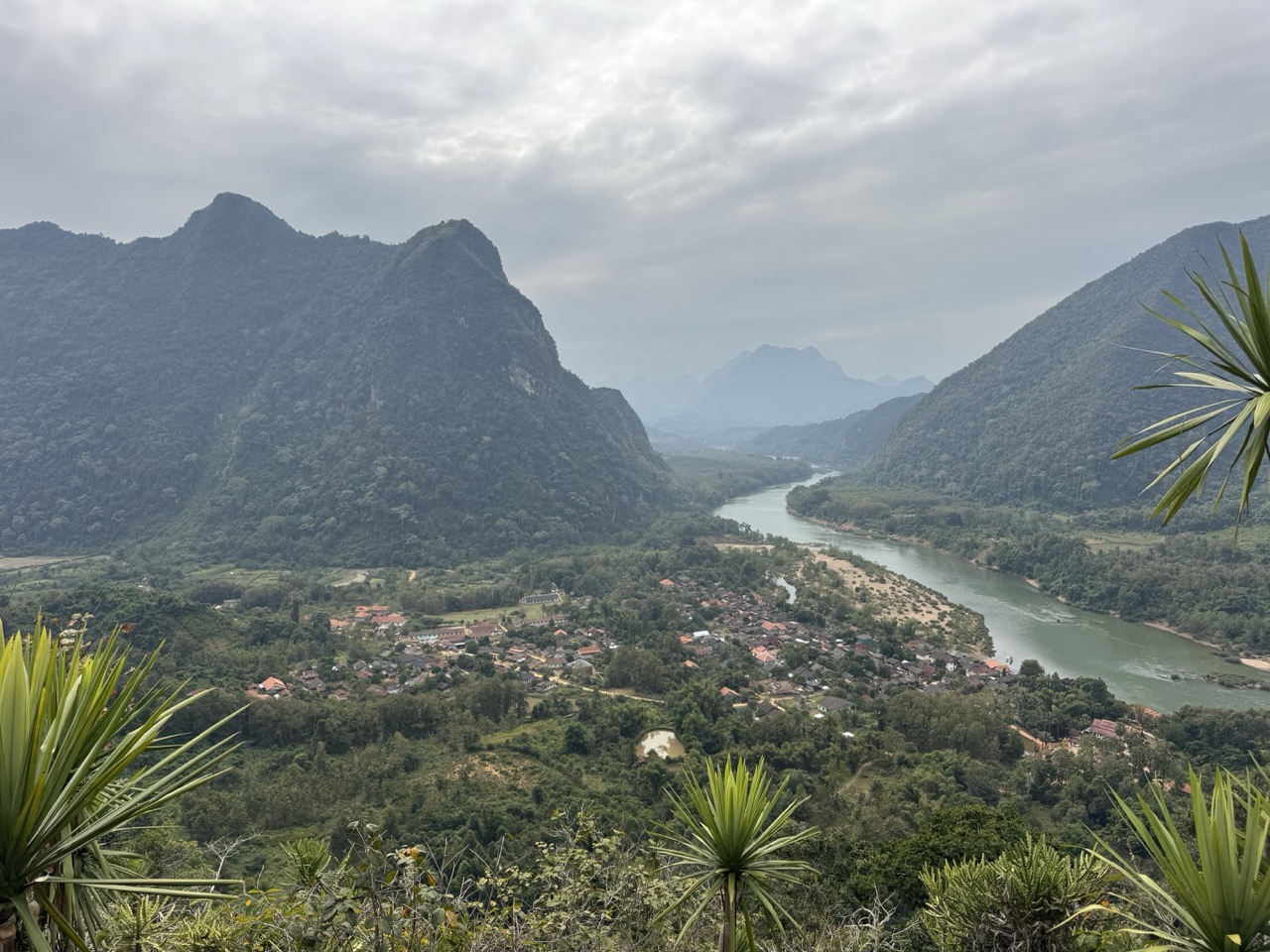
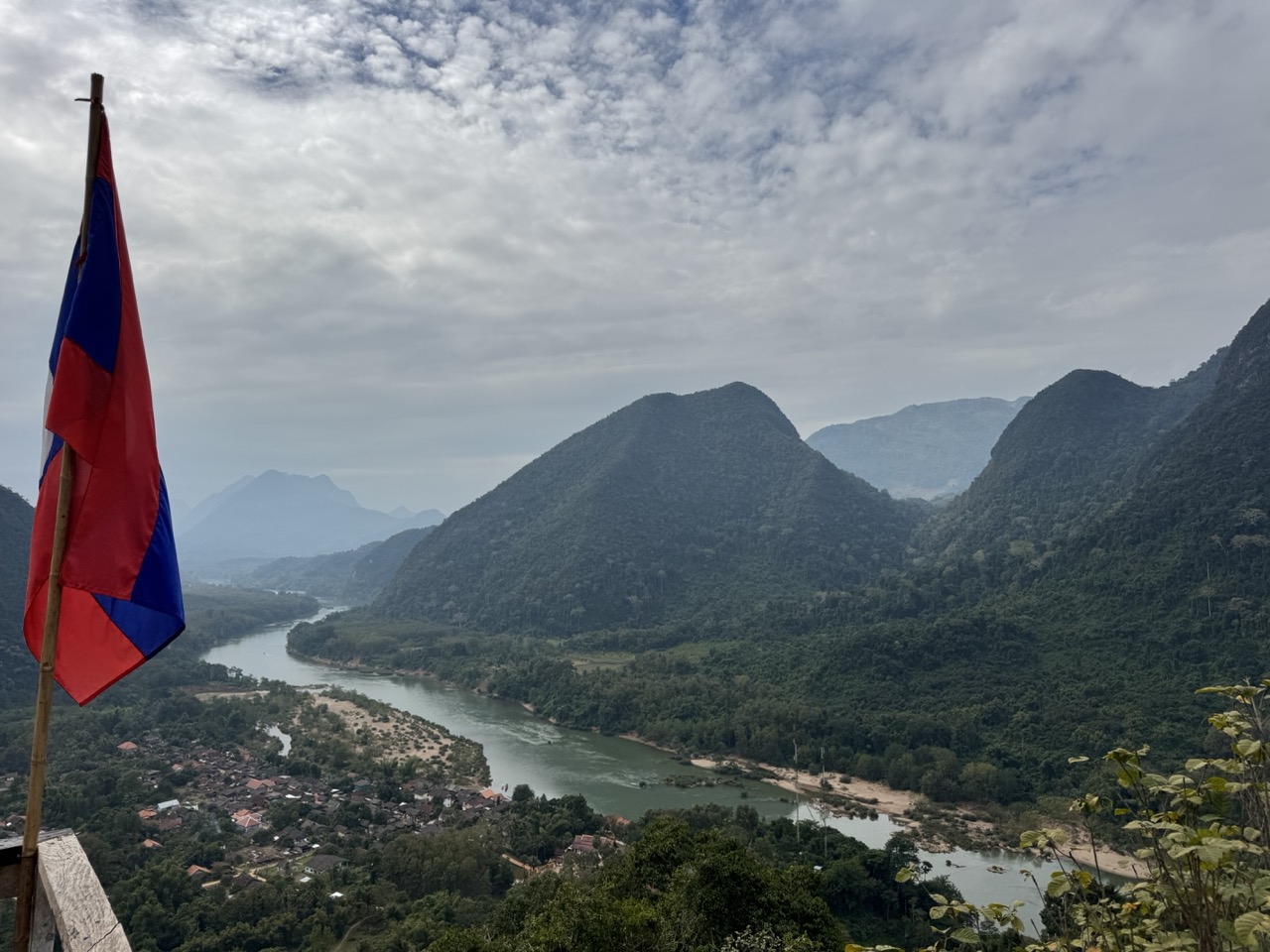
Muang Ngoi is a footnote village a one-hour boat ride upriver from Nong Khiaw, with no road access. It exists, more or less, because backpackers in the 1990s decided it was the most beautiful village they'd ever seen and word never quite died out. They were right. There's a single dirt-and-stone main street, no cars at all, a hundred guesthouses, two ATMs that may or may not work, and views of the karst peaks that make you forget about your phone for a while.
Road in
You can't ride in. Park your bike at one of the secure compounds in Nong Khiaw (most Nong Khiaw guesthouses will hold your bike free if you're staying when you return) and take the boat. Public boat is 30,000 kip per person each way; the trip takes about an hour. Boats run on a daily schedule that's effectively "it leaves when it's full or by 11 am".
What to do
Pha Noi viewpoint is the main hike — 90 minutes up through bamboo, ending at a flag-marked rock with a view that has been on more wallpapers than any other viewpoint in Laos. Bring water.
Tham Kang cave and Tham Pha Kaew cave, both about an hour's walk into the surrounding jungle, are the other major day-walks. Local kids will offer to guide you for 50,000 kip and they're worth it — the trails aren't always obvious.
The village itself is the attraction. Sit on a riverside porch at sunset with a Beerlao and watch the longboats come in. There's a reason people get stuck here for a week.
Food
The riverside guesthouses serve the same Lao basics as everywhere else; the difference is the setting. The bakery halfway down the main street does excellent banana pancakes if you need a Western morning. The single Indian restaurant — yes, really — is run by an Indian backpacker who got stuck and stayed; it's good and cheap.
Where we stayed
Bamboo bungalow with a river-facing porch, 250–400 THB. Nicer concrete-and-wood places back from the river, 500–800 THB. There's no high-end option in Muang Ngoi and there shouldn't be.
Our take
Plan one night. You'll probably stay two. We've stayed three. The town's pace will rearrange your relationship with time. Just make sure to plan around the boat schedule — missing the morning return boat back to Nong Khiaw means losing a riding day.
Oudomxay
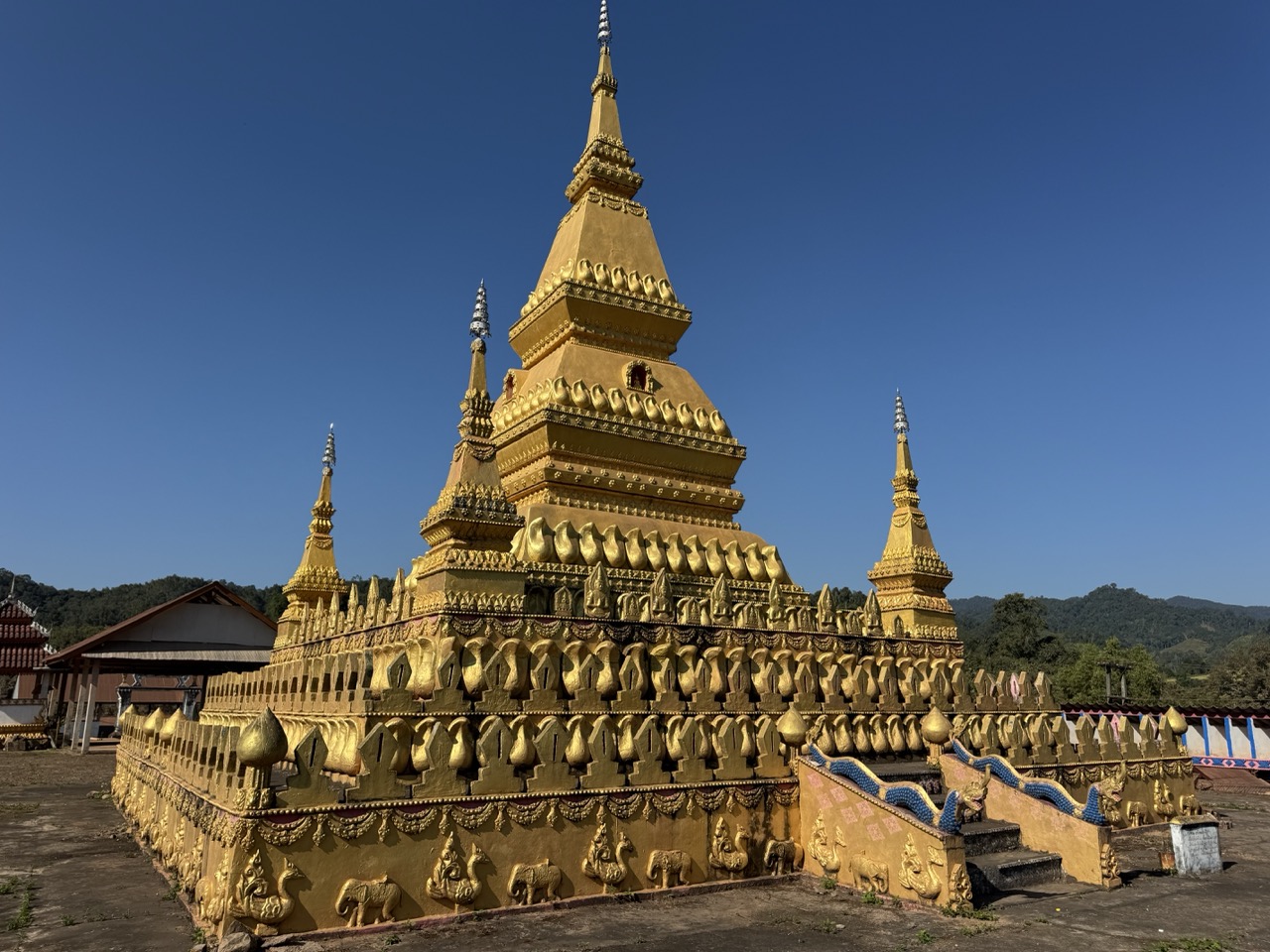
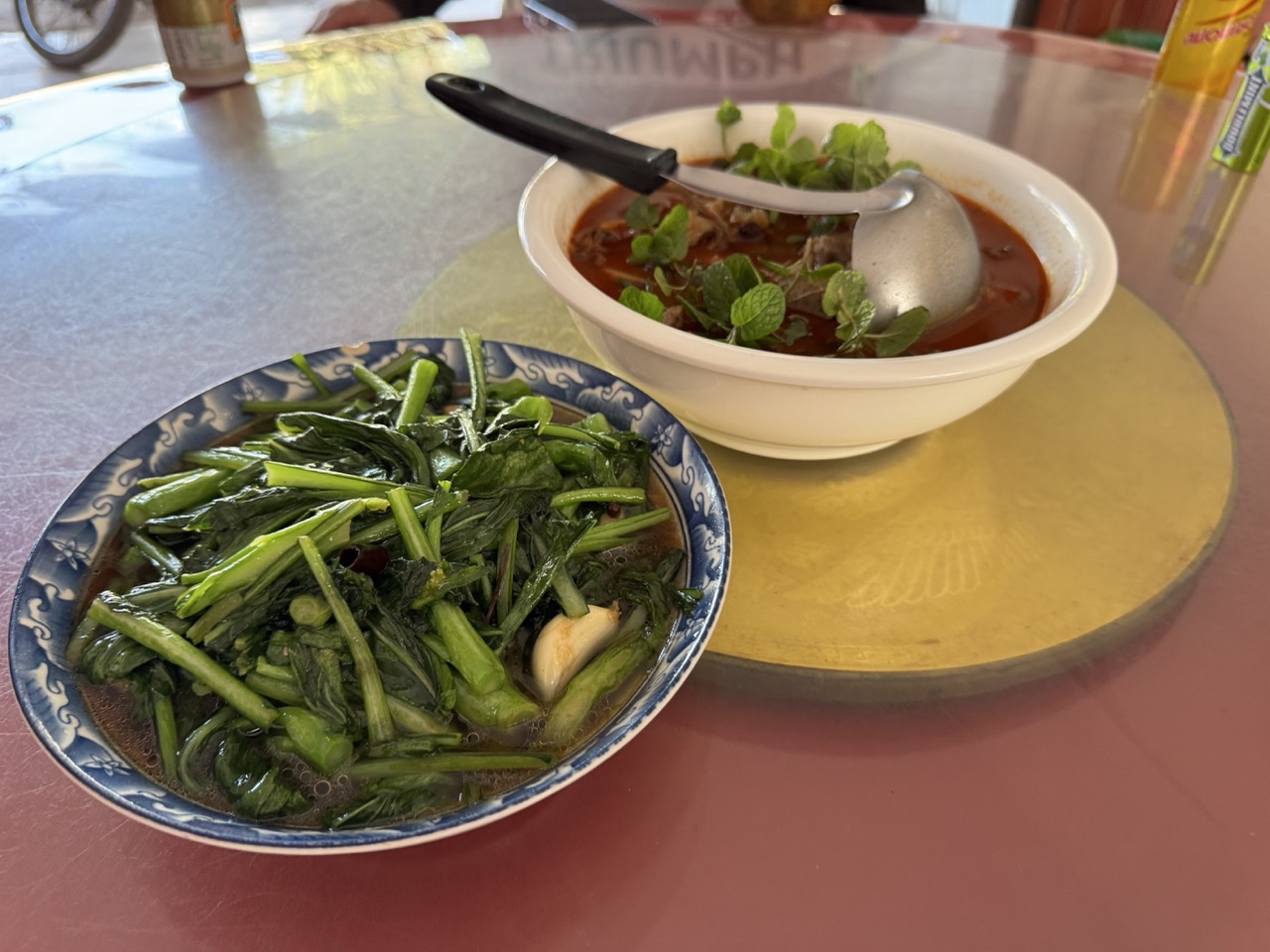
Oudomxay (also called Muang Xay) is the unavoidable junction town of Northern Laos. Whatever route you're riding, you almost certainly pass through it. It's not on most riders' must-see lists, and that's fine — it's a working town that does its job, with adequate food, adequate hotels, and a couple of attractions that earn an afternoon if you're stuck waiting out weather.
Road in
Paved from every direction. From Luang Namtha (3 hours), Phongsaly south (7–8 hours), Pak Beng (3 hours), or Luang Prabang (4–5 hours). Route 13 runs straight through the centre.
What to do
The Phou Sai stupa on the hill above town has a panoramic view of the surrounding countryside and is the obvious half-hour activity. The morning market is one of the larger fresh-produce markets in the north and worth a wander if you've never been to one. Beyond that, Oudomxay isn't trying to be a destination.
Food
The strip of restaurants on Route 13 through town is the best dinner option — Vietnamese-influenced pho is excellent, Lao laap is reliable. The Chinese-run noodle places near the main intersection are surprisingly good and open early. Roadside stalls sell some of the best banana fritters in the country, pulled fresh from a wok of palm oil.
Where we stayed
Charming Lao Hotel (around 800–1,200 THB) is the comfortable option with secure parking. Plenty of cheap guesthouses below 500 THB.
Our take
One night, max. Eat well, sleep early, ride out at first light to wherever you're actually going.
The Mekong & Cultural Heart
Pak Beng
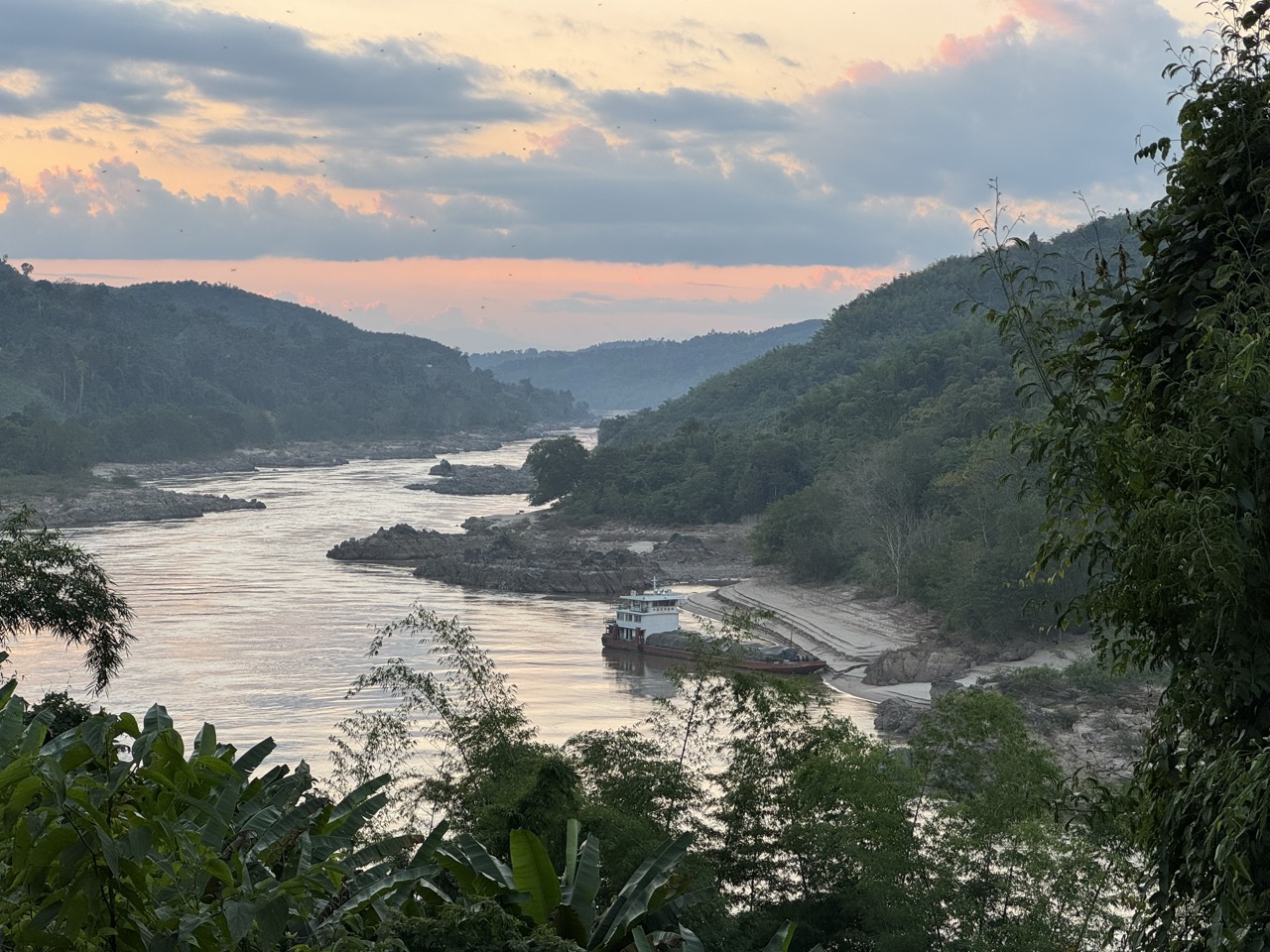
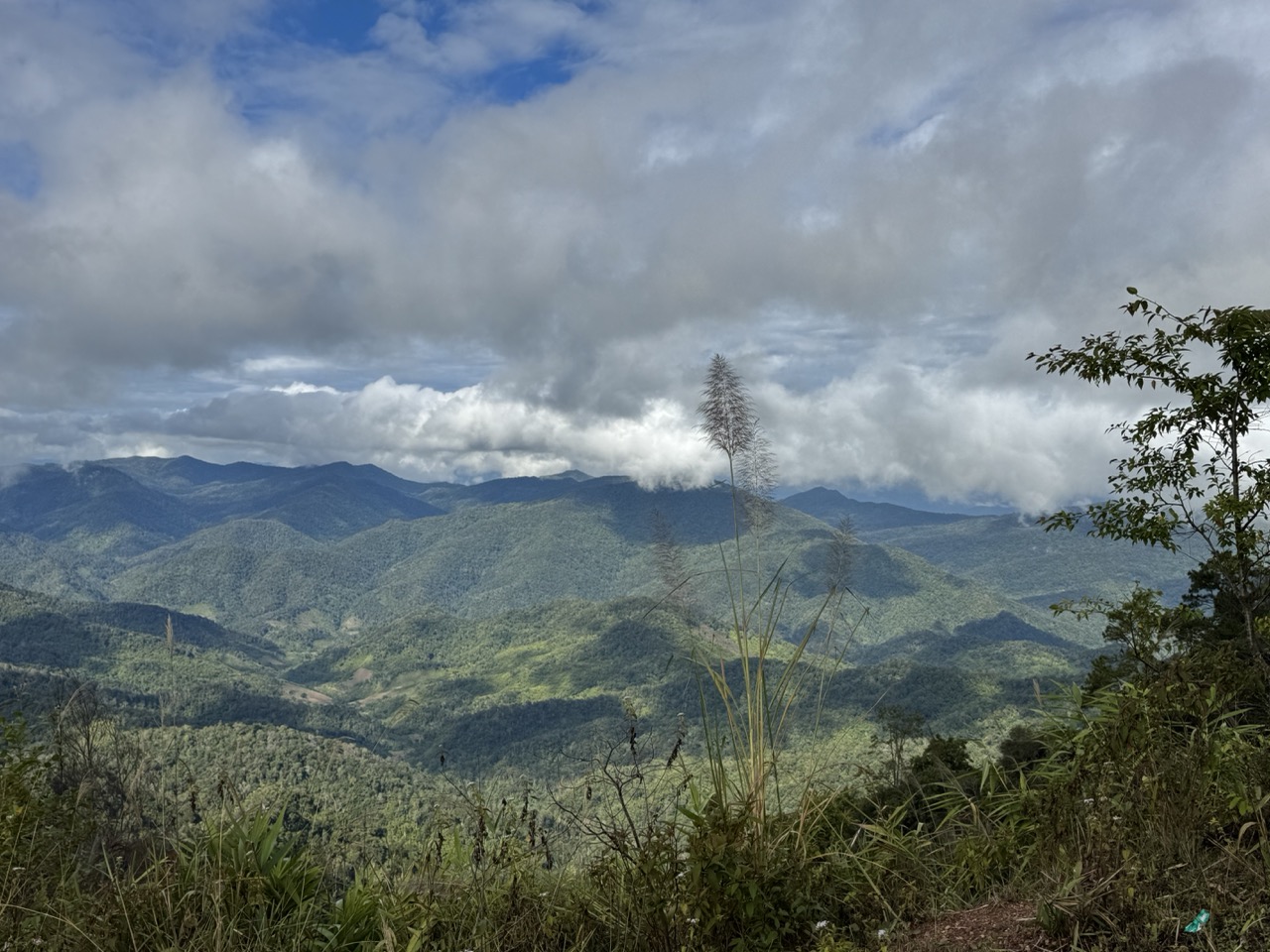
Pak Beng is the village halfway between Houayxay and Luang Prabang on the Mekong, traditionally the slow-boat overnight stop. Most travelers reach it by boat. We've ridden in twice — both times via Route 2W from Oudomxay — and both times concluded that Pak Beng is more interesting than its reputation as "the boat town" suggests. Two genuinely good hotels, a proper Mekong sunset, and a half-day's worth of food and walking.
Road in
Route 2W from Oudomxay south is paved, scenic, mountainous and roughly 3 hours of riding with a couple of villages along the way. The road has been steadily improving and is currently a comfortable ride. From Houayxay direct, Route 2 south is rougher and longer (around 4–5 hours); we'd take a slow boat from Houayxay if that were the only option, but coming in from Oudomxay the road is a pleasure.
The descent into Pak Beng off the ridge is one of the more spectacular short rides in northern Laos — switchbacks dropping into the Mekong valley with the river opening up below.
What to do
Honest answer — sit and watch the river. Pak Beng's main attraction is itself. The slow boats arrive in the late afternoon, the river turns gold, and the whole village dines along the strip of restaurants on the main road. The walk to the Wat Sin Jong Jaeng temple at the south end of town is a 20-minute pleasant amble.
The cargo boats heading up- and down-river continue all night and provide an oddly beautiful soundtrack — engines and water and occasional voices from the bank.
Food
The restaurant strip on the main road has half a dozen places doing nearly identical menus — laap, fish, fried rice, pizza, French toast. Some are better than others; the test is whether the fish smells like fish or smells like the river bottom. The Hive Bar at the north end of the strip is the closest thing to a Western dinner option and works well.
Where we stayed
Mekong Riverside Lodge is the standout (1,500–2,500 THB) — proper rooms with real river views, comfortable beds, hot water, decent breakfast. Pak Beng Lodge is the slightly nicer alternative (2,000–3,000 THB) and the place we usually book when traveling with someone who hasn't done the route before. The dozens of cheaper options on the back streets are fine; the river is the point.
Our take
One night, sometimes two. The boats and the sunset are the experience. If you want a slow morning before continuing on to Luang Prabang, two nights works. If you're tight on days, one night is enough.
Luang Prabang
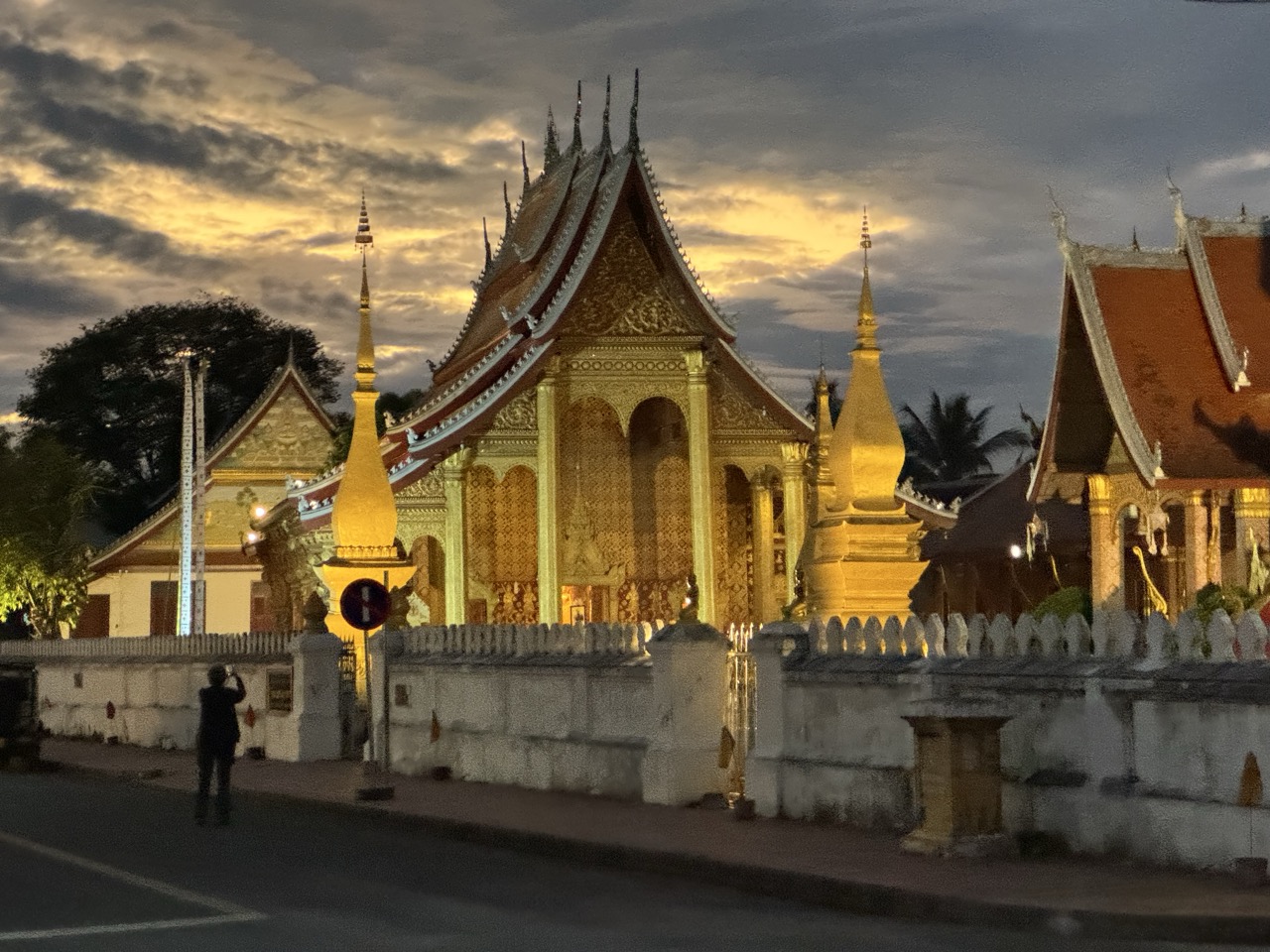
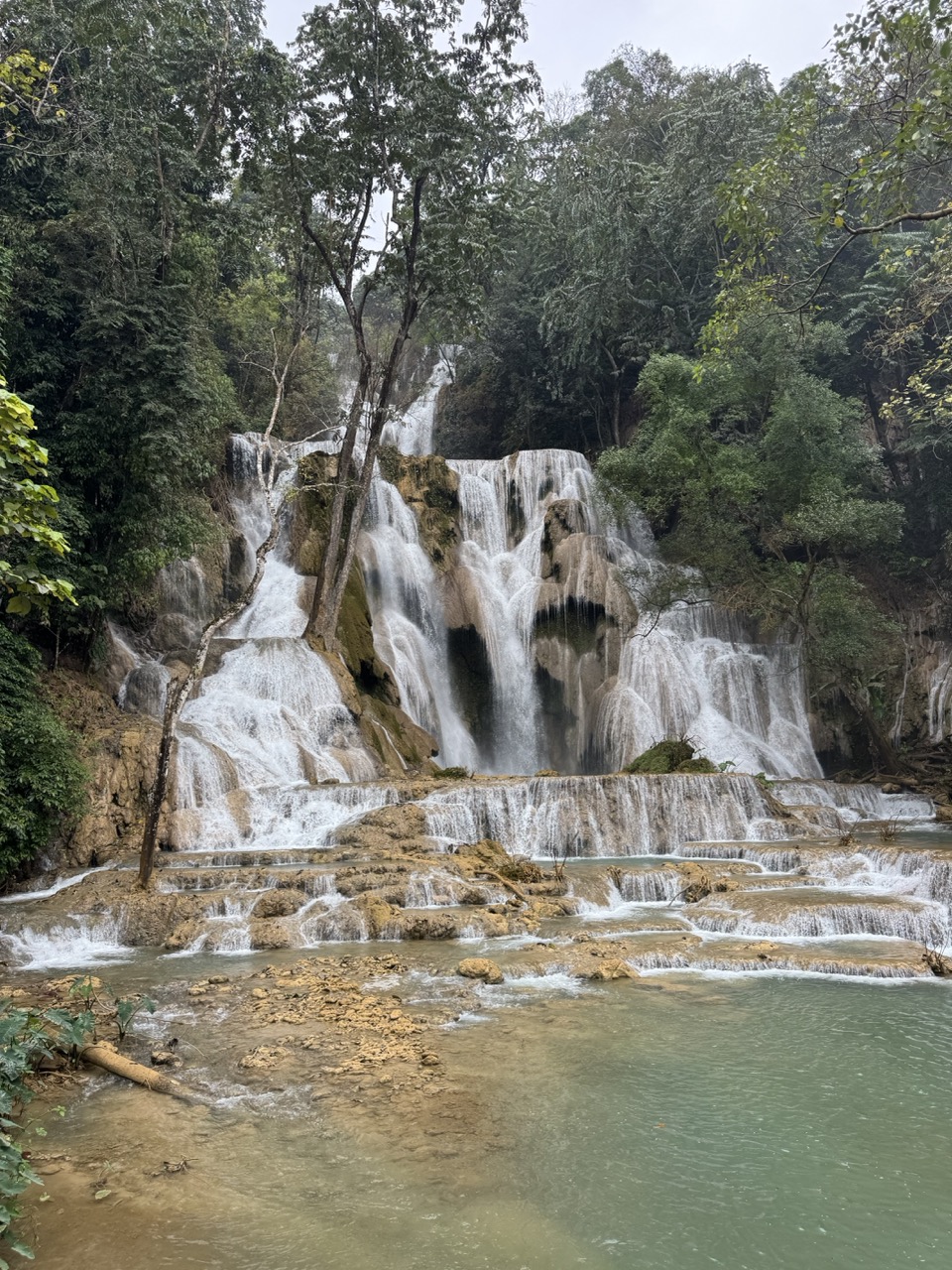
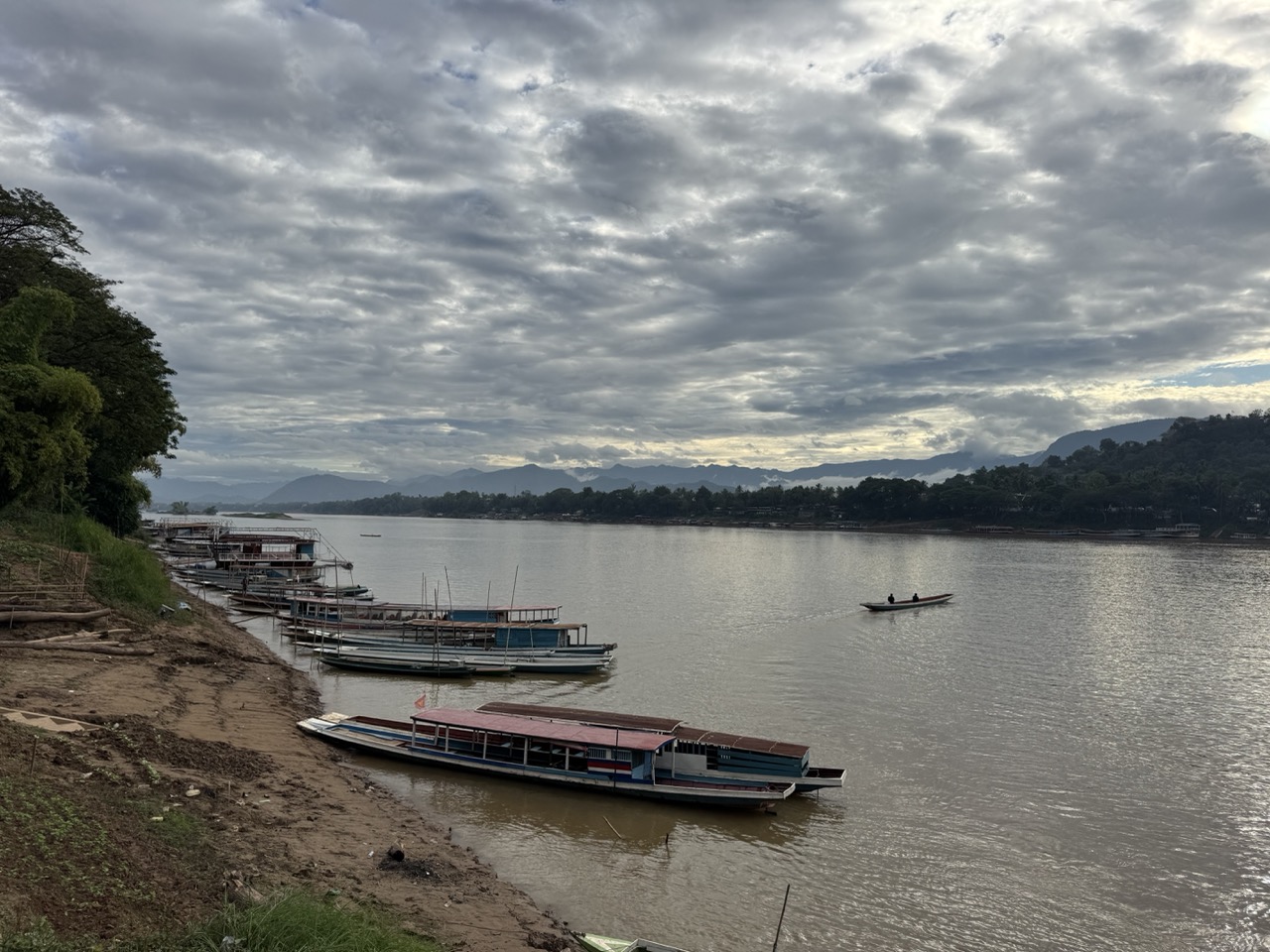
Luang Prabang is, by some distance, the architectural and cultural high point of Laos and one of the most photographed UNESCO World Heritage cities in Asia. It earns the reputation. The old town — a peninsula at the confluence of the Mekong and the Nam Khan — is a tight grid of French colonial shophouses and Buddhist temples, walking-friendly, restaurant-dense, and, most days, the cleanest place you'll be on this trip. After two weeks of dirt roads and village guesthouses, the contrast is exactly what most riders need.
Road in
From Oudomxay or Pak Beng on Route 13, paved the entire way, with one of the most spectacular mountain-pass sections in the country at the descent into the Mekong valley. From Nong Khiaw via Route 1C south then Route 13, also fully paved. Two and a half to four hours from any of the obvious starting points.
What to do
The morning alms ceremony (tak bat) at sunrise — saffron-robed monks walking the streets receiving rice from kneeling locals. Genuinely moving in person. Don't take flash photographs and stay back; the ceremony is religious, not a performance.
Wat Xieng Thong at the tip of the peninsula is the most beautiful temple in the country — gold mosaics, multi-tiered roof, and the late-afternoon light is unmatched.
Mount Phousi sunset climb — 350 steps up the hill in the centre of the old town, panoramic views, expect crowds. Worth it once.
Kuang Si Falls, 32 km south of town, is the iconic Lao waterfall — turquoise pools, cascading drops, swimming holes. Get there at 8 am to beat the tour buses. The road is paved and the ride is gorgeous; it's the day we look forward to.
Pak Ou Caves, 25 km upriver, are reachable by motorcycle (paved road on the south bank) or by boat. Hundreds of Buddha statues in two cliff caves above the Mekong. Pleasant rather than essential.
The night market on Sisavangvong Road is the best handicraft market in the country. Hmong textiles, silver work, scarves. Bargain hard.
Food
This is where Laos pretends to be France. The riverside restaurants do excellent French and fusion dishes at prices that climb fast — a steak frites with a glass of wine will set you back 600–900 THB. For better value: Lao Lao Garden does excellent Lao classics at fair prices in a nice setting, Bouang does well-reviewed Lao-French fusion, and Khaiphaen is a training-restaurant for at-risk youth that punches well above its price. The noodle stall on Kounsouane road does the best khao soi in the country — open from 6 am, closed by 11.
The local breads (proper baguettes), the fresh fruit shakes, the hand-pulled rice noodles, the laap stuffed with local herbs — Luang Prabang is the meal-planning capital of the country.
Where we stayed
The riverside boutique hotels run 2,500–5,000 THB, with the genuinely lovely places (Villa Maly, Belle Rive, Kingfisher Ecolodge) in the higher band. Mid-range guesthouses on the back lanes of the old town are 1,200–2,000 THB. We've stayed at all price points and the trade-off is real — the riverside experience is worth the upcharge once.
Our take
Three nights minimum. Four is better. One day for the morning ceremony, the temples and the night market; one for Kuang Si; one for slow time. Riders who do Luang Prabang in 24 hours regret it. The city is meant to be wandered.
South to the Capital
Phonsavan
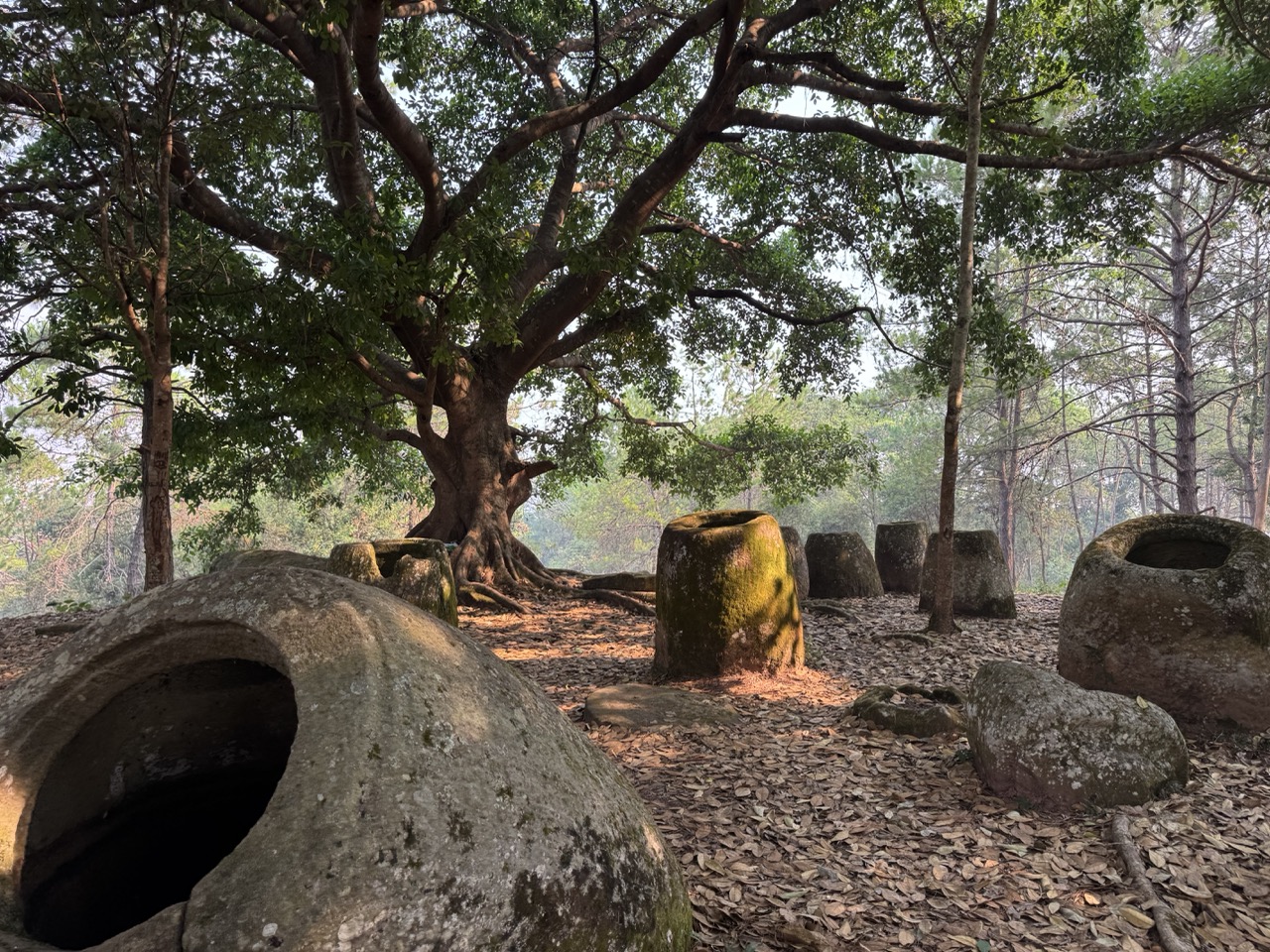
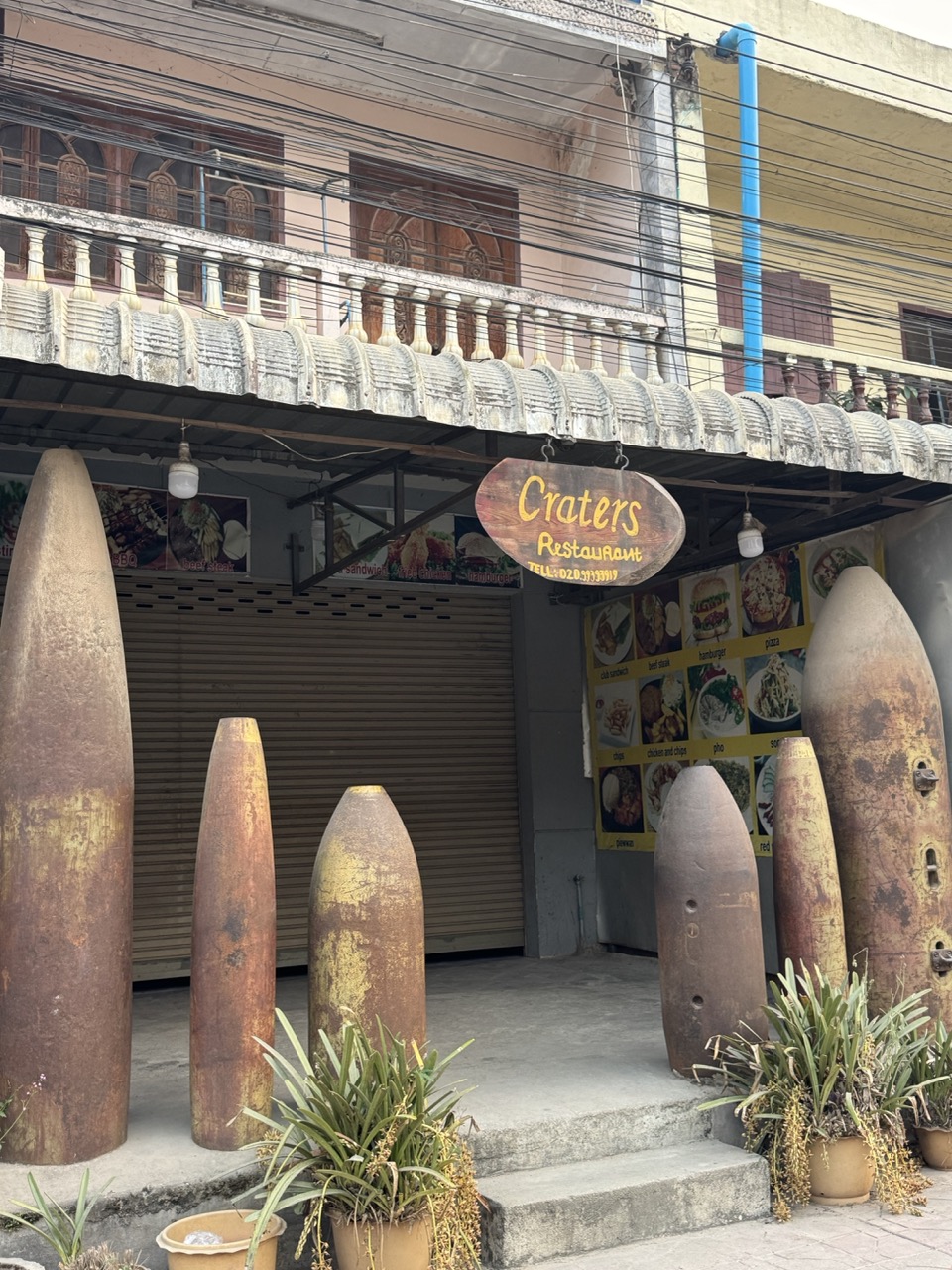
Phonsavan, in Xieng Khouang province, is the highlands town that exists primarily because of two things: the Plain of Jars, and the legacy of the Secret War. It's a less-visited stop on most Northern Laos itineraries — the road south from Luang Prabang is long and winding — but it offers a perspective on Laos you won't get anywhere else, and the riding to and from is some of the best in the country.
Road in
Route 13 south from Luang Prabang to the junction at Phou Khoun, then Route 7 east to Phonsavan. The whole thing is paved and the ride is genuinely spectacular — high-altitude curves, panoramic ridges, jungle valleys dropping away on both sides. Plan 6–7 hours from Luang Prabang with photo stops; we usually break the ride at one of the roadside guesthouses in Phou Khoun if we're not in a hurry. Watch your fuel — the longer stretches between stations are 70+ km. From Vang Vieng, Route 13 north then Route 7 east is the alternative approach — also paved and scenic.
What to do
The Plain of Jars is the headliner — three main sites (Site 1, Site 2, Site 3) with hundreds of stone jars dating to the Iron Age, carved from sandstone, scattered across a wide highlands plateau. Site 1 is the largest and most accessible by motorcycle; Site 2 and Site 3 are smaller, prettier, and quieter, and the rough track to Site 3 is enjoyable on a CRF. Recently de-mined and well-marked; stay strictly on the marked paths.
The MAG (Mines Advisory Group) information centre in town is the educational complement — a sober, well-presented exhibit on the history of UXO contamination from the Secret War, the ongoing demining work, and the survivors. Worth an hour.
Crater Restaurant has actual unexploded ordnance casings (defused) decorating the dining room — odd to eat surrounded by but the food is good and the proceeds support a local charity.
Tham Piu cave, 60 km out of town, was the site of one of the deadlier American bombing incidents of the war. It's a thoughtful day trip if you've got the time and the headspace.
Food
Phonsavan is a small highlands town; food is hearty and warm. The market on the main road has a row of pho and noodle stalls that open at 6 am and serve the best breakfast in the region — bowls in the 25,000–30,000 kip range. For dinner, Crater Restaurant is an experience; Bamboozle does respectable Lao-Western fare; the family-run sticky-rice-and-grilled-pork stalls along Route 7 east of the town centre are some of the best country food on the trip.
Where we stayed
Auberge Plain of Jars (1,500–2,500 THB) is the standout — bungalows on a hill outside town with a fireplace in each room, which you'll want in December. Anoulack Hotel (700–1,000 THB) is the comfortable budget choice in town.
Our take
Two nights. One for Site 1 plus the MAG centre, one for Site 2/3 and a slow lunch. Phonsavan is one of the more memorable stops on the trip if you give it the time.
Vang Vieng
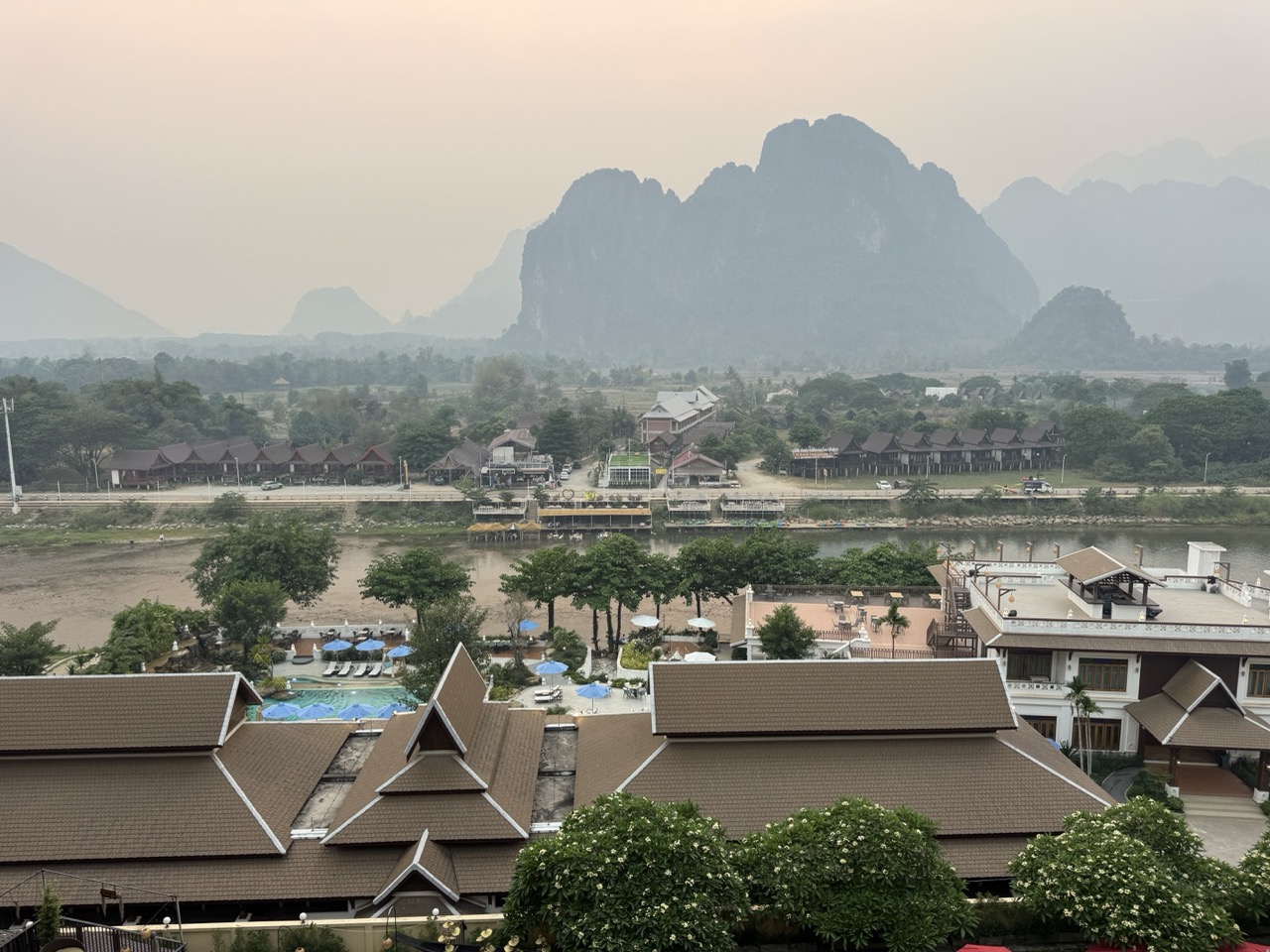
Vang Vieng has had one of the more dramatic reputational swings of any Southeast Asian town. Twenty years ago it was famous for tubing, drugs and dead backpackers; ten years ago it was a sanitised family-tourist destination; today it's Chinese-tour-bus central with a rapidly-developing high-end resort scene. Through all of that, the underlying landscape — Nam Song river curling through karst peaks — has remained one of the most cinematically beautiful settings in mainland Southeast Asia.
Road in
Route 13 south from Luang Prabang via Phou Khoun is paved, mountainous, and one of the better paved rides in the country (around 6 hours). From Phonsavan, Route 7 west to Phou Khoun then Route 13 south is also paved and gorgeous. The descent into Vang Vieng off the last ridge gives you a Cinemascope view of the karst valley that justifies the ride on its own.
What to do
The viewpoints are the main reason to stay. Pha Ngern, Nam Xay and Pha Hom are all 30-minute hikes for staggering views over the karst valley. Sunrise and sunset are both worth the effort.
Hot air balloon rides at sunrise are now a standard Vang Vieng activity (1,500–2,500 THB) and the views are exactly what you'd hope. Book the day before.
The blue lagoons (multiple — Blue Lagoon 1, 3, 5 are the most-visited) are turquoise spring-fed swimming holes set in the surrounding hills. Blue Lagoon 3 is the prettiest and least-crowded.
Tubing still exists but is a much-reduced version of its previous self — 4-5 riverside bars with mostly-controlled drinking, the big party scene long gone. Pleasant for what it is.
The dirt-road riding around the Nam Song is excellent. We've spent a full day on a CRF following back roads up the river valley with no agenda and counted it among our better days.
Food
Vang Vieng's food has improved considerably in the last few years. The riverside restaurants at the south end of town do good Lao food with a view; the streets back from the river have several genuinely excellent Indian and Italian options. For breakfast, the bakery on the main road does excellent French pastry and decent coffee.
The local Beerlao on tap at any of the riverside bars is the cheapest cold drink in the country and the best afternoon activity in town.
Where we stayed
Riverside Boutique Resort and Vang Vieng Riverside (both around 2,500–3,500 THB) are the standout mid-range options with proper river views. Cheaper guesthouses in the centre of town run 600–1,200 THB. The high-end resorts on the east bank are 4,000+ THB and worth it once.
Our take
Two nights. One for viewpoints and a hike, one for slower river time. Some riders skip Vang Vieng and we understand why — the tour-bus crowds can be heavy in season — but the landscape is so good that we'd argue for at least an overnight.
Vientiane
Vientiane is the capital, but you'd be forgiven for not noticing. Smaller than most American mid-size cities, with no high-rises to speak of and a riverfront promenade quieter than a French village square, Vientiane is one of the more relaxed national capitals in the region. For a motorcycle traveler, it's the natural southern endpoint of the Northern Laos route and the place where you make the call: ride back, or fly home.
Road in
Route 13 south from Vang Vieng is paved, fast, mostly flat and around 3–4 hours of riding through the lowland rice plains. The road becomes increasingly trafficked as you near the city; expect Vietnamese-style motorbike chaos in the city centre itself.
What to do
Patuxai, the Lao Arc de Triomphe, is the obvious tourist landmark. Climb to the top for a panoramic view of the city. The decorative cement was famously donated by the U.S. government in the 1960s for an airport runway and used here instead.
Pha That Luang, the gold-clad national stupa, is the most important religious monument in the country. Worth visiting in late afternoon when the gold catches the sunset.
Wat Si Saket is the oldest temple in Vientiane and houses thousands of small Buddha statues in wall niches. The architecture is more interesting than most Lao temples; an hour's slow walk-through.
Buddha Park (Xieng Khuan), 25 km southeast of the city, is a surreal sculpture park of Hindu and Buddhist concrete statues, including a 40m reclining Buddha. Either bizarre or wonderful depending on your tolerance for kitsch. The ride is a pleasant half-day.
Food
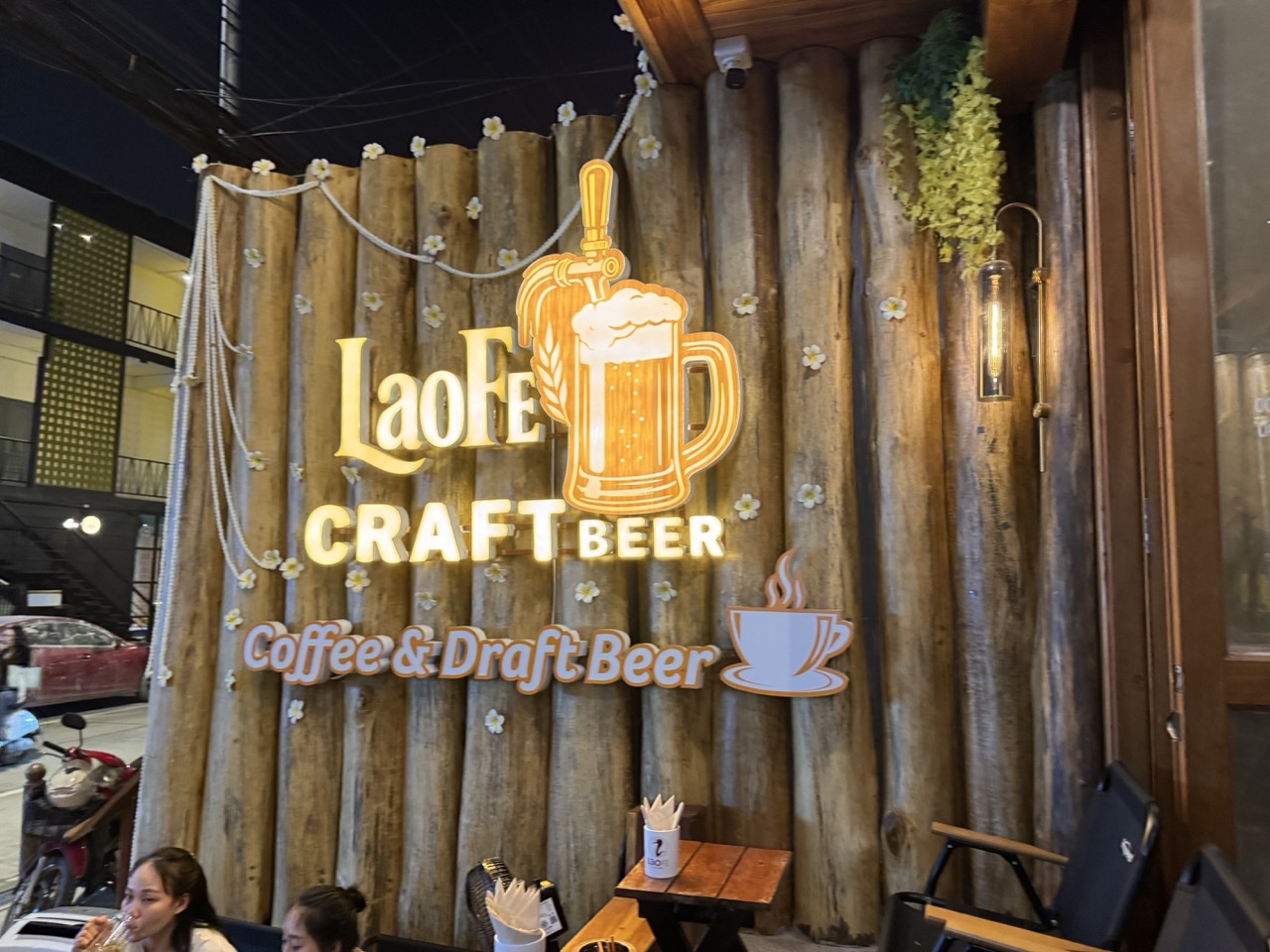
Vientiane has the broadest restaurant scene in Laos by a long way. The riverside French restaurants are the best in the country (Le Silapa and Lao Kitchen are both excellent). For Lao food, Khop Chai Deu is a reliable tourist-favourite that does the classics well. LaoFe Craft Beer Bar is the standout for Western drinkers — proper craft beer, decent burgers, and the best evening atmosphere of any bar in the country. Le Banneton does the best French pastries we've had in Asia.
Where we stayed
Settha Palace Hotel (3,500–6,000 THB) is the colonial-luxe option for a final-night splurge. Crowne Plaza and Salana Boutique are mid-range standouts (1,800–2,800 THB). Cheaper guesthouses cluster near the Mekong and start around 700 THB.
Our take
Two nights. One day for the city, one for Buddha Park or the riverfront. Vientiane is a reset stop — the place where you process the trip, eat well, and decide whether you're riding back or shipping the bike home. Either way, end the trip with a Beerlao on the Mekong and watch the sun go down on Thailand.
Frequently Asked Questions
How many days do I need for Northern Laos by motorcycle?+
Seven days is the bare minimum to ride from Houayxay to Vientiane via Luang Prabang and have any chance of stopping. Ten to fourteen days is the comfortable range — long enough to actually visit Phongsaly or the Nam Ou river towns rather than ride past them. Twenty-one days lets you do the entire route at a relaxed pace including side trips. Most riders who do it in seven days regret it; most who do it in fourteen are already planning the next one.
What is the best time of year to ride a motorcycle in Northern Laos?+
November through February. Cool nights, warm days, blue skies, and the agricultural burning has not started. December and January are peak — pack a light jacket because temperatures in the mountains around Phongsaly drop into single digits. Avoid March and April (burning season haze hides the karst peaks and the air can be unhealthy) and avoid June through September (rainy season landslides and washouts).
What are the road conditions like in Northern Laos?+
Houayxay to Luang Namtha is fully paved on Route 3 (4 hours, easy). Luang Prabang to Phonsavan is fully paved on Routes 13 and 7 (6-7 hours, mountainous and beautiful). Phonsavan to Vang Vieng to Vientiane is also fully paved (around 9 hours total). The biggest dirt sections are between Luang Namtha and Phongsaly, between Phongsaly and Muang Khua, and along the Nam Ou river from Muang Khua south — all rideable on a Honda CRF, all challenging in the rainy season.
Can I do Northern Laos on a 125cc scooter?+
Officially no — Lao customs requires Thai-registered motorcycles to be 250cc or larger. Some riders have crossed on smaller bikes at certain borders, but it is inconsistent. Even if you got across, the road quality on the Nam Ou and the climbs to Phongsaly would hammer a 125cc scooter. A Honda CRF 250L Rally or 300L Rally is the right tool for this trip.
Is it safe to ride a motorcycle in Laos?+
Mostly yes, with caveats. Daytime riding on paved roads is straightforward. The genuinely dangerous parts are night riding (water buffalo, drunk drivers, no street lighting), rainy-season mud and washouts, and your own fatigue on the long days. Police checkpoints are friendly and routine. Petty theft is rare. Don't ride after dark and you'll be fine.
Where can I find motorcycle parts in Laos?+
Realistically, only Vientiane and Luang Prabang carry meaningful inventory for foreign motorcycles. Honda CRF parts are findable at small shops in both cities; KTM, Yamaha and Kawasaki parts are essentially unavailable in Laos and need to be shipped from Thailand if something serious breaks. Always carry spare tubes, levers, an air filter and a wheel-bearing kit on every Laos trip.
Should I ride to Pak Beng or take the slow boat?+
Both work. Riding direct from Houayxay to Luang Prabang via Oudomxay is the faster option (one or two days) and lets you see the inland route. The slow boat (two days with an overnight in Pak Beng) is a slower, more iconic, and at times magical experience — and you can put a small motorcycle on the boat with the luggage. We have done both and think the slow boat is worth doing once even if it costs a day.
Quick Summary
Planning a Northern Laos motorcycle trip?
Rider's Corner rents Honda CRF 250L and 300L Rallys built for the trip and prepares your power-of-attorney paperwork for 750 THB. Book online and we'll have everything ready when you pick up.